+86-13532971605

Moisture removal is easy to specify vaguely and difficult to prove. Semiconductor and electronic assemblies may contain polymers, adhesives, cavities or substrates whose drying responses differ substantially. A purchasing decision based only on oven temperature can miss the real requirement: evidence that the chosen vacuum, or vacuum-plus-nitrogen, process removes the relevant moisture without harming the product. This workflow is intended for engineering trials, not as a replacement for an approved moisture-sensitive-device bake specification.
A semiconductor vacuum drying process is a controlled use of reduced pressure and heat to remove moisture or other permissible volatiles from compatible materials. It does not necessarily replace a package-specific moisture-sensitivity handling procedure, and no single drying recipe is appropriate for every device.
First define the affected material and failure mode. Moisture that matters for a packaged electronic component may be different from residual liquid in an engineered assembly. The test endpoint might be mass stability, a qualified electrical parameter, visual inspection, or an approved materials analysis result. For moisture-sensitive packaged devices, the component manufacturer’s instructions and applicable handling standards take precedence over a generic oven recipe.
Thermal compatibility is the range of temperatures and exposure times a material can tolerate without unacceptable change. Document package materials, coatings, adhesives, connectors and any temperature-sensitive subassemblies before choosing setpoints.
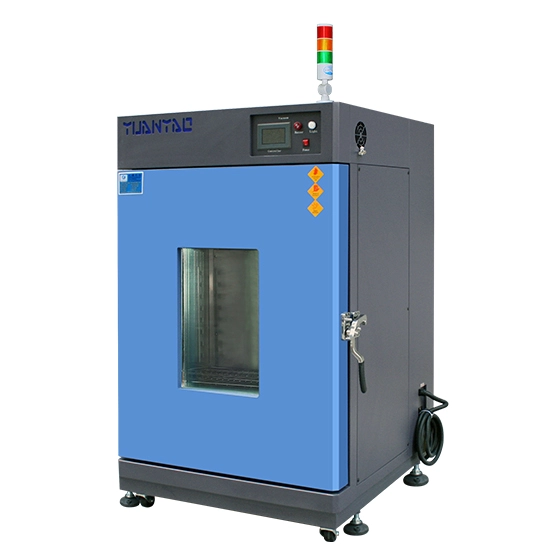
Do not confuse a chamber's maximum temperature with a validated process temperature. Yuanyao offers laboratory and industrial vacuum ovens with standard temperature ratings and separately listed higher-temperature configurations; the maximum available setting depends on the actual model and quotation. Higher-temperature capability should not be treated as standard across every model. The component manufacturer's handling instructions and the validated recipe must govern the actual process.
Vacuum degree describes the pressure achieved inside the process chamber, while drying performance depends on pressure, temperature, load geometry and time together. Lower pressure may assist volatile removal, but it can also create new concerns for sensitive materials or trapped cavities.
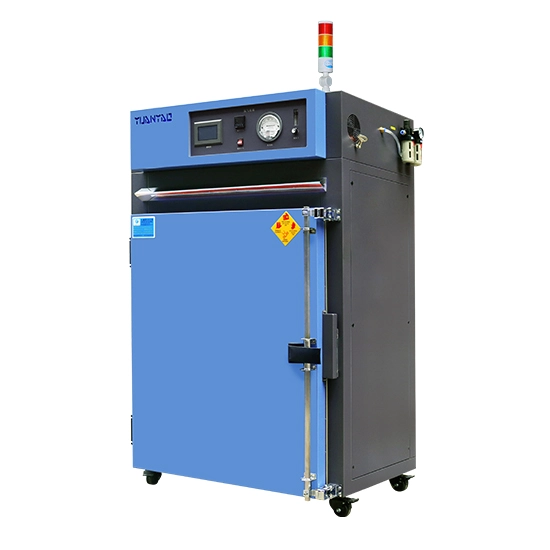
For Yuanyao’s YPON vacuum nitrogen drying oven, request a written pressure specification identifying whether each value is absolute or gauge pressure, together with the pump configuration and measurement conditions. Do not assume that differently expressed catalog pressure figures are interchangeable or guaranteed under a loaded process. An optional low-pressure figure shown for other industrial vacuum ovens must not be attributed to every vacuum-nitrogen model. The purchasing team should ask where pressure is measured, how quickly the chamber reaches target pressure with the load, and whether the target can be sustained during the planned dwell.
Effective drying time is the interval in which the loaded workpiece experiences the intended conditions, not merely the time since the operator pressed Start. Thick fixtures and stacked carriers can heat more slowly than the chamber wall or sensor.
For a qualification trial, place temperature sensors on representative thermal masses while logging chamber pressure. Start the accepted dwell period only when the written process criteria have been met. This improves comparability between a small trial run and a fully loaded production batch.
Equipment architecture is the combination of heating, pressure control, circulation and instrumentation used to realize the recipe. When sourcing equipment from china vacuum oven suppliers, process engineers should assess leak tightness, pump integration, loaded temperature distribution and cleaning access rather than relying on country of origin as a performance indicator.
Process issue | Pressure stability | Thermal exposure | Drying endpoint | Repeatability |
What to measure | Loaded pressure trace | Part-temperature map | Approved product criterion | Trial-to-trial variation |
Common purchasing mistake | Quoting only an unloaded vacuum limit | Using controller temperature as part temperature | Assuming all batches dry in identical time | Accepting a single successful demonstration |
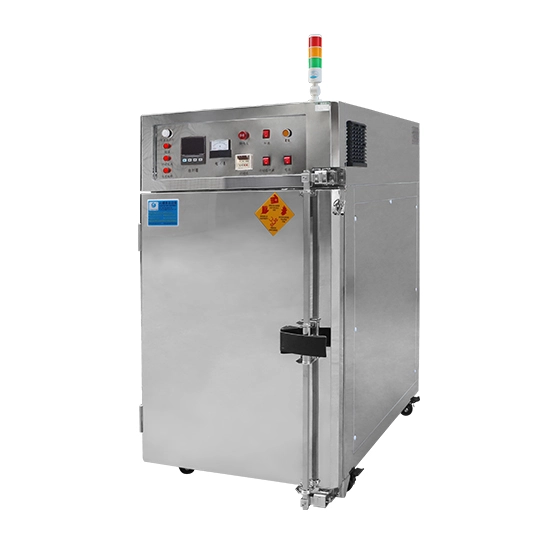
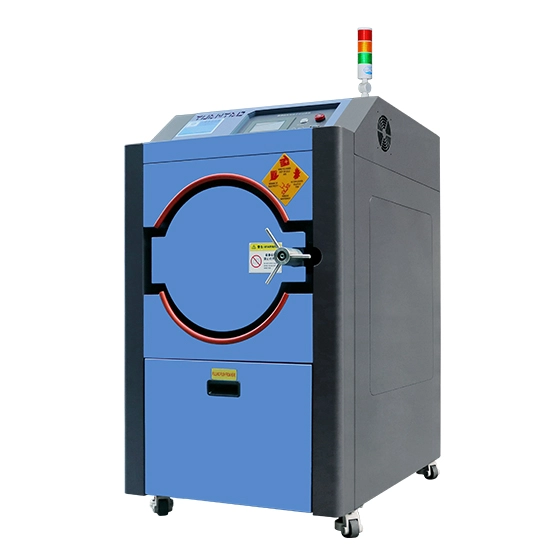
For semiconductor-related precision electronics, Yuanyao also offers a Vacuum Nitrogen Drying Oven (YPON series), combining a vacuum pump with nitrogen-system components. Its application list includes wafer-related parts, LED components and precision electronics, but the exact process and any cleanliness requirements still require verification. For the YPON vacuum nitrogen drying oven, the detailed table identifies a standard operating range from RT+25°C to 200°C; any higher-temperature requirement should be confirmed for the selected model, including heater configuration, chamber materials and acceptance conditions. Request the specific instruments and records needed for your test rather than assuming every option is included.

A drying endpoint is a predefined signal that further processing is unnecessary for the intended quality objective. The endpoint should be chosen by engineering or quality teams and tied to actual product behavior, not invented from chamber capability.
A mass-based method may be suitable for some materials, while electrical or analytical assessment may be essential for others. Do not assume vacuum-assisted drying qualifies a moisture-sensitive semiconductor package: its handling, floor-life reset and baking limits require the component manufacturer’s qualified procedure. If parts must be transferred to controlled storage, define the maximum allowed time between unloading and protective packaging. Otherwise reabsorption can undermine an otherwise successful process.
Vacuum drying is one approach among several temperature-and-atmosphere technologies. A vacuum-plus-nitrogen configuration provides another candidate where an engineered sequence of evacuation, heating and inert-gas exposure is needed; the sequence and resulting atmosphere must be specified and tested. For some oxidation-sensitive materials, inert gas baking may be relevant; for less sensitive loads, forced-air heating can be simpler. Each method needs its own acceptance conditions.
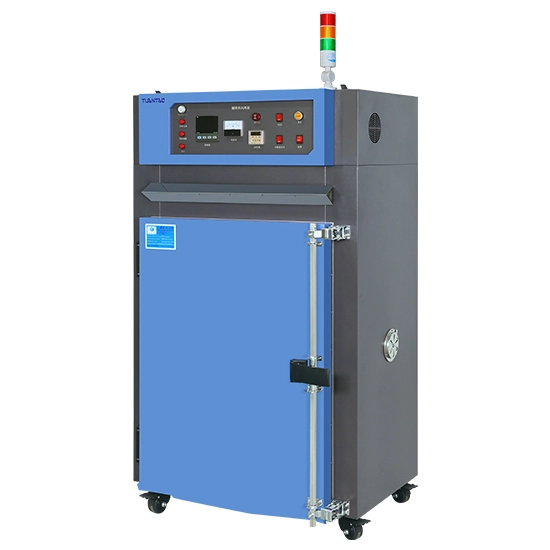
Yuanyao's industrial hot air oven range provides an alternative heating equipment category, while vacuum systems address pressure-controlled processing. A process trial should compare the actual outcome and total cycle cost rather than making a choice based on terminology.

Factory acceptance is documented evidence that supplied equipment meets agreed functional and performance requirements. Specify alarm tests, leak checks, sensor calibration documentation, empty and loaded thermal mapping, recovery after door opening, and complete recipe traceability.
When evaluating vacuum drying oven manufacturers, procurement teams should examine pump maintenance, contaminant handling, gasket replacement and cleaning access. These operational details may determine whether a technically successful trial remains repeatable across shifts.
No. Product geometry, material behavior and validated conditions determine the outcome.
No. Confirm device and materials compatibility before approving the recipe.
Not necessarily; use a defined pressure justified by testing.
A written process window with acceptance criteria and representative load details.
No. Loads and fixtures alter heat transfer.
Follow the qualified handling window established for the material or device.
Successful semiconductor vacuum drying is a validation exercise, not a temperature-setting exercise. Yuanyao offers industrial vacuum ovens and vacuum nitrogen drying ovens for evaluating semiconductor-related drying tasks. To request a suitable configuration, provide the material and packaging type, required pressure basis and setpoint, process temperature, load geometry, nitrogen requirements and measurable drying endpoint; confirm performance in a representative loaded trial before production release.

 English