+86-13532971605


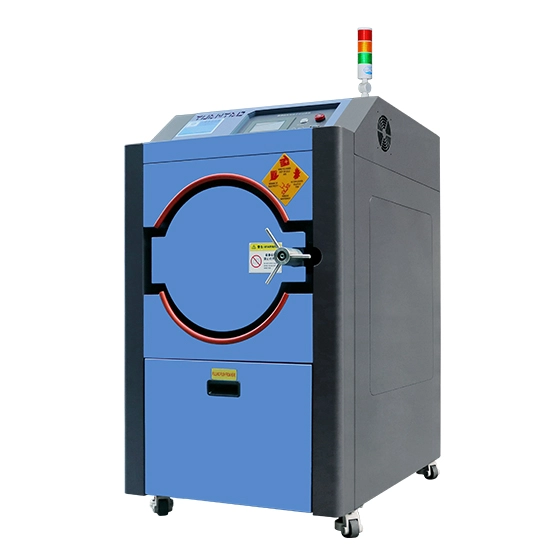
In the semiconductor industry, reliability is not proven by performance alone. It is proven by survival—survival under heat, humidity, voltage, and time. Among the most demanding tests in this arena is the Pressure Cooker Test (PCT), also known as the Highly Accelerated Stress Test (HAST) when conducted under biased conditions. PCT aging test chambers have become indispensable tools for evaluating the moisture resistance of semiconductor packages, particularly for plastic-encapsulated ICs, automotive chips, and leadframe-based devices.
PCT aging testing subjects semiconductor packages to high temperature, high humidity, and elevated pressure—typically 105°C to 130°C, 85% to 100% RH, and 1 to 3 atmospheres. These conditions accelerate the penetration of moisture into the package, exposing weaknesses in encapsulation materials, interfacial adhesion, and passivation layers. The goal is simple: determine whether a package can withstand the moisture exposure it will face in real-world applications.
JEDEC JESD22-A110 (HAST) and JESD22-A102 (PCT) define the standard test conditions and procedures. These tests are widely used for:
Plastic-encapsulated ICs : Evaluating molding compound integrity and interfacial delamination.
Automotive chips : Verifying reliability under humid, high-temperature environments such as engine compartments and under-hood electronics.
Leadframe-based devices : Assessing corrosion resistance and adhesion between leadframe, die, and encapsulant.
Semiconductor packages are not hermetic by default. Plastic molding compounds absorb moisture over time, and when that moisture reaches the die surface or internal interfaces, it can cause:
Corrosion of aluminum metallization
Delamination at the die/encapsulant interface
Popcorning during reflow soldering
Leakage current and dielectric breakdown
Catastrophic field failures
PCT aging chambers accelerate these failure mechanisms by driving moisture into the package under pressure. The result is a fast, repeatable, and highly sensitive test that reveals weaknesses before they reach the customer.
1. Package Qualification and Material Selection
PCT testing is used to qualify new molding compounds, die attach materials, and leadframe finishes. It helps manufacturers select materials that can withstand moisture exposure without degradation.
2. Automotive and Industrial Reliability
Automotive semiconductors must meet stringent AEC-Q100 requirements, including moisture sensitivity level (MSL) classification and HAST testing. PCT chambers provide the controlled environment needed to demonstrate compliance.
3. Process Development and Yield Improvement
By identifying moisture-related failure modes, PCT testing informs process improvements in encapsulation, curing, and surface treatment.
4. Incoming Material Inspection
PCT chambers are used to verify the quality of incoming molding compounds and substrates, ensuring consistency across production lots.
Not all pressure cookers are created equal. A semiconductor-grade PCT aging chamber must deliver:
Precise temperature control: Typically 105°C to 132°C, with uniformity of ±0.5°C to ±1.0°C across the chamber.
Accurate humidity control: 75% to 100% RH, with stable saturation and minimal fluctuation.
Pressure control: 1 to 3 kg/cm², with safety interlocks and automatic depressurization.
Uniform steam distribution: Ensuring every sample experiences the same stress conditions.
Corrosion-resistant construction: Stainless steel chambers and wetted parts to withstand long-term exposure to high-purity steam.
Data logging and traceability: Continuous recording of temperature, humidity, pressure, and time for quality documentation.
Safety systems: Over-pressure protection, over-temperature protection, and door interlock systems.
Several converging trends are making PCT aging chambers more essential than ever:
Advanced packaging: Fan-out, 2.5D, and 3D packaging introduce new materials and interfaces that require rigorous moisture testing.
Automotive electrification: Power modules, inverters, and onboard chargers must survive humid environments and thermal cycling.
Wide-bandgap semiconductors: SiC and GaN devices operate at higher temperatures and are often used in harsh environments, demanding robust packaging.
Zero-defect expectations: Automotive, medical, and aerospace customers require demonstrated reliability, not estimated reliability.
Faster time-to-market: PCT testing compresses months of field exposure into days or weeks, accelerating product qualification.
When evaluating PCT aging chambers for semiconductor applications, consider:
Application expertise: Does the supplier understand JEDEC standards and semiconductor failure mechanisms?
Customization capability: Can the chamber accommodate different package sizes, loading fixtures, and test conditions?
Control system: Does it support complex multi-step profiles, data logging, and remote monitoring?
Service and calibration: Is the supplier capable of supporting installation, calibration, and maintenance in your region?
Track record: Has the supplier delivered PCT chambers for similar semiconductor applications?
PCT aging test chambers are not simply pressure vessels—they are precision instruments that accelerate the verification of moisture resistance in semiconductor packages. From plastic-encapsulated ICs to automotive chips and leadframe devices, these chambers provide the controlled, repeatable, and accelerated conditions needed to expose hidden weaknesses before they become field failures.
As packaging technology advances and reliability requirements tighten, the ability to perform accurate, reproducible PCT testing becomes a strategic capability. Manufacturers who invest in high-performance PCT aging chambers today will be better positioned to deliver the reliable, moisture-resistant semiconductor packages that tomorrow's applications demand.

 English