+86-13532971605

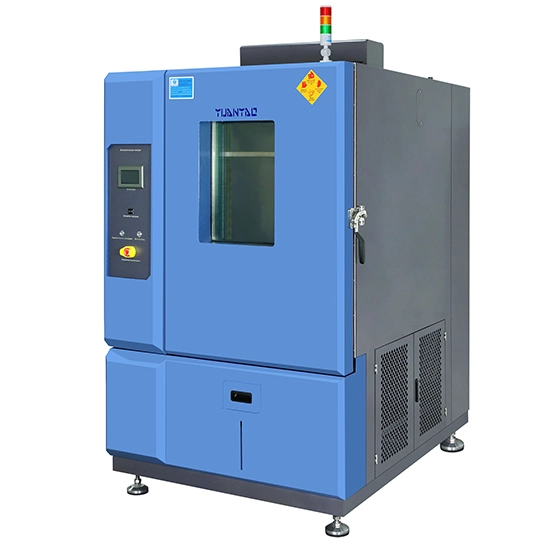
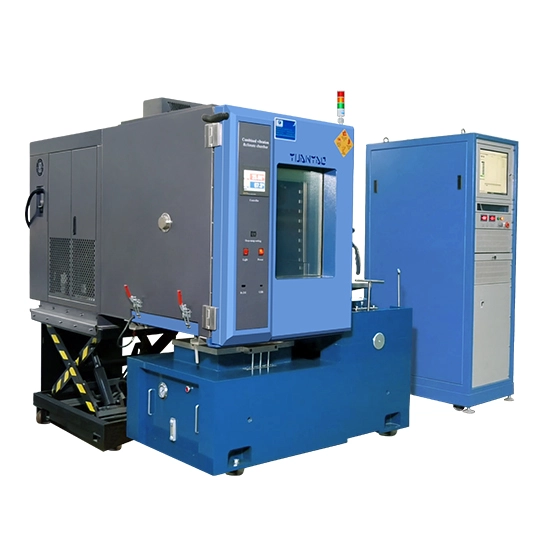
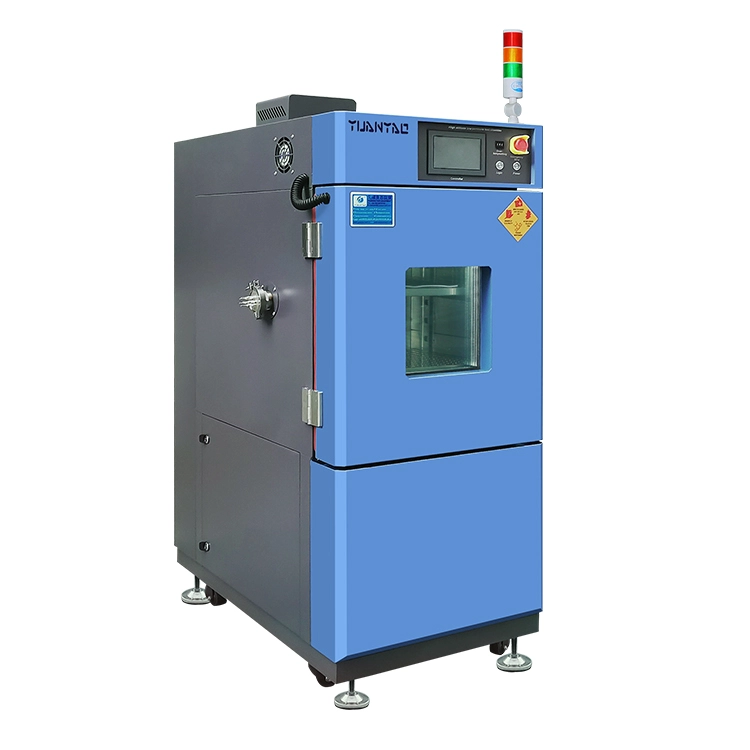
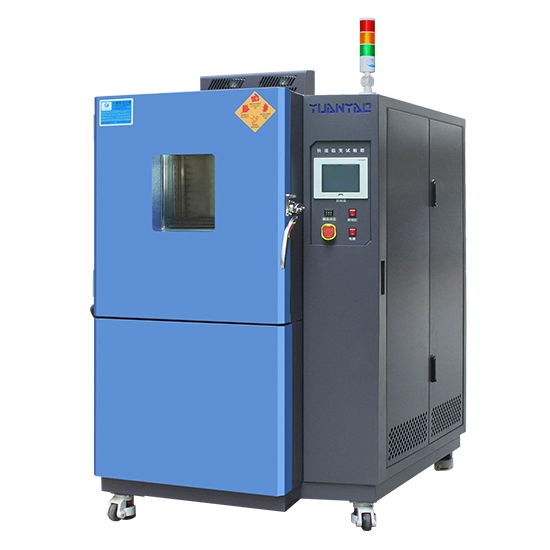
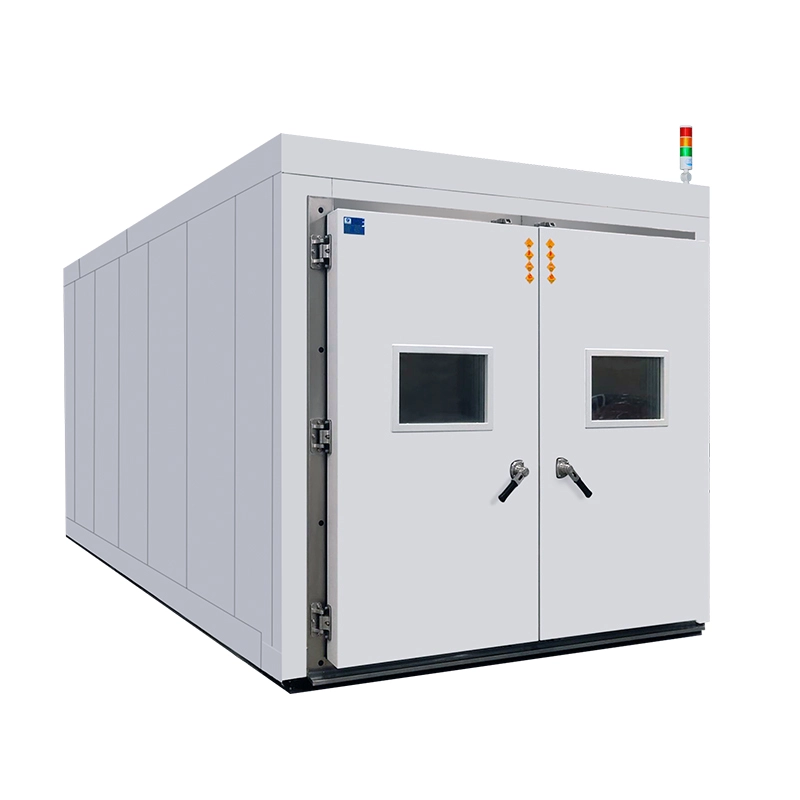
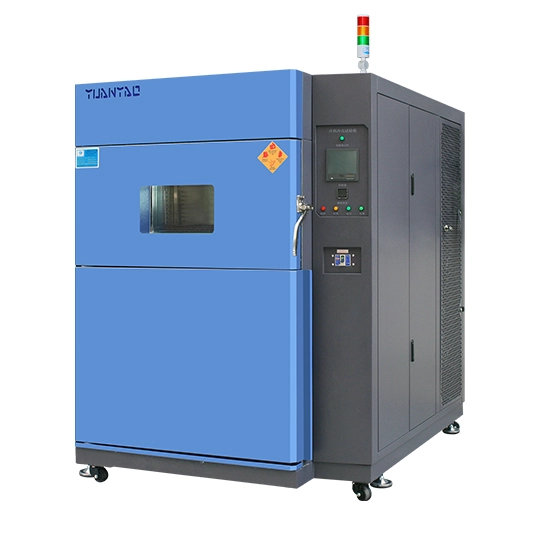
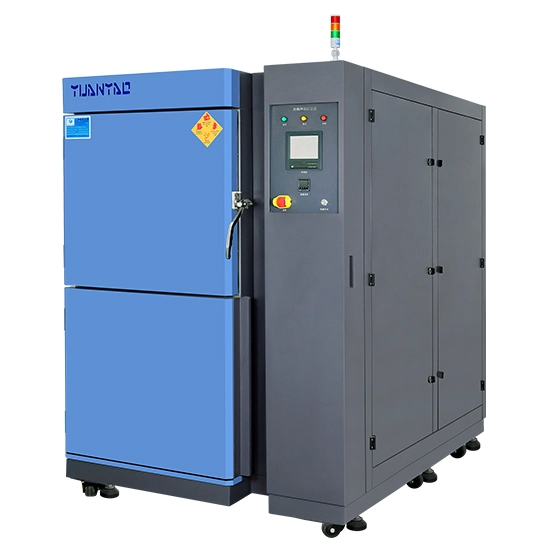
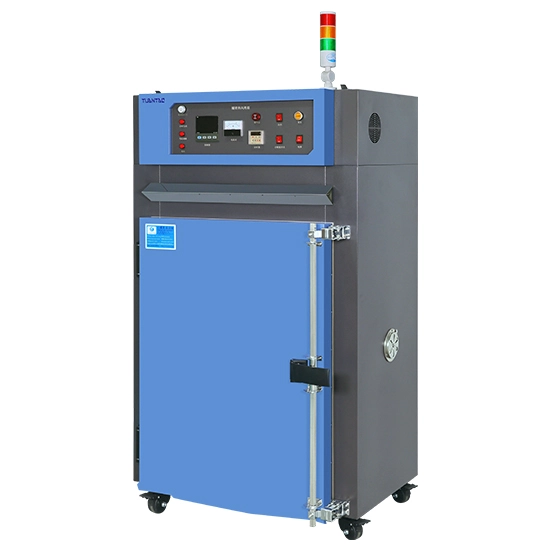
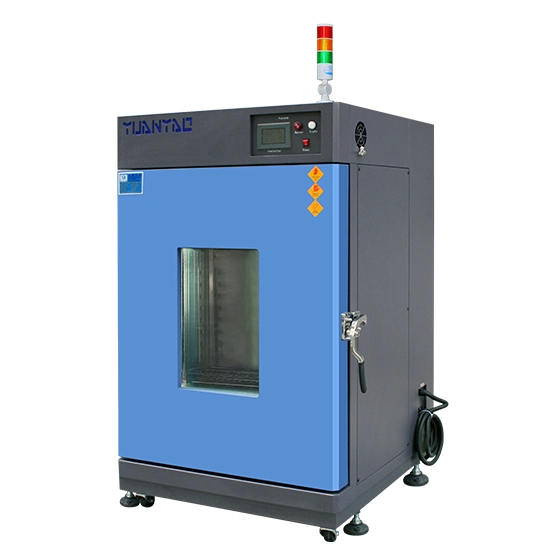
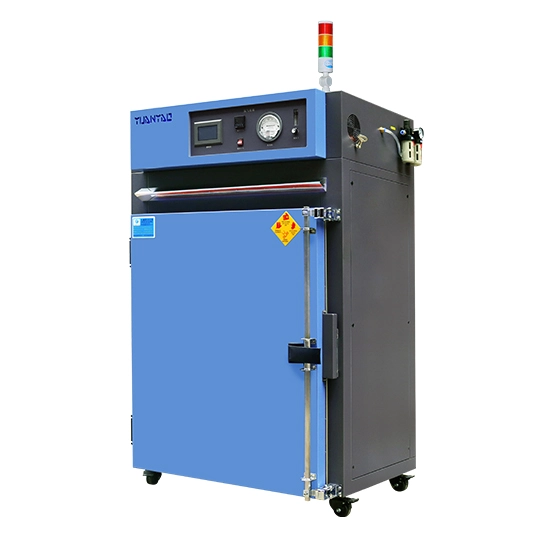
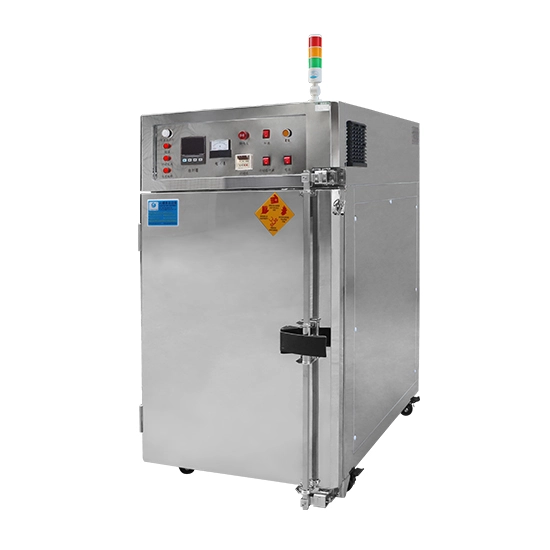
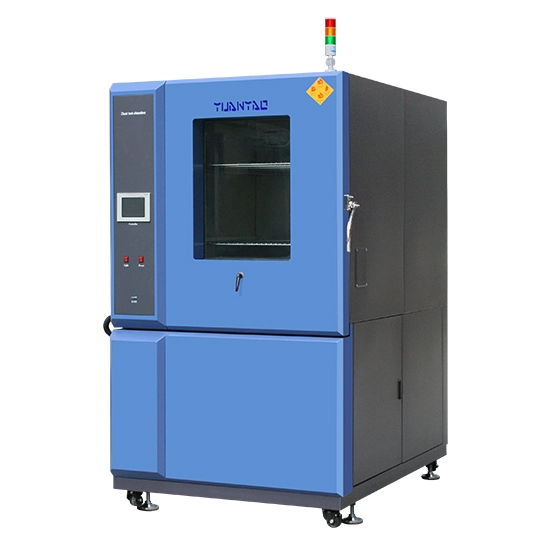
The liquid thermal shock chamber subjects samples to high and low-temperature liquid media, rapidly switching temperatures to expose materials to extreme thermal stress environments, thereby revealing their potential weaknesses. This experiment can simulate the sharp temperature changes that might occur in actual use, enabling research and development teams to observe the physical and chemical performance changes in materials over a short period, including phenomena such as cracking, embrittlement, reduced elasticity, and dimensional deformation. The scientific data obtained from liquid thermal shock experiments provide reliable evidence for the modification and formulation optimization of materials and can also verify the stability and durability of materials under complex environments. The precise temperature control and rapid switching capabilities of the liquid thermal shock chamber make the experimental data highly reproducible, providing powerful technical support for material research and development.
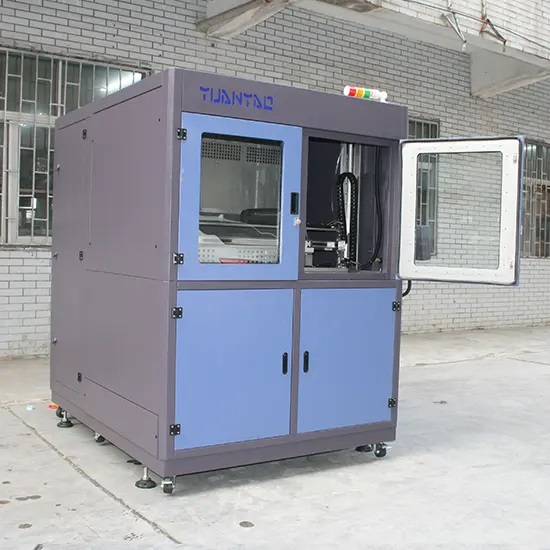
In a liquid thermal shock chamber, materials subjected to cyclic shock from hot and cold liquids undergo thermal stress reactions, which often expose issues within the formulation. For example, plastics may crack or soften under alternating high and low-temperature liquids, rubber materials may lose elasticity due to sudden temperature changes, and composite materials may experience delamination or interface peeling under thermal shock. By systematically observing these phenomena, researchers can identify which components or structural designs lead to performance degradation and accordingly adjust formulation components, add modifiers, or optimize processing techniques to improve the material's reliability in real-world environments. The controllable temperature zones and cycling speeds of the liquid thermal shock chamber make the experimental results more scientific and closer to real-use conditions.
During material development, liquid thermal shock chambers can be used to compare the performance of different formulations under extreme temperature cycles. Through experiments, research teams can quantify indicators such as dimensional changes, cracking rates, elasticity recovery, and surface integrity of materials under alternating hot and cold liquid conditions. These data can directly guide formulation optimization, including selecting base materials more resistant to high and low temperatures, adding enhancers, and improving filler distribution. The liquid thermal shock chamber can simulate various temperature shock conditions and precisely control experimental parameters, allowing the development team to systematically verify each modification's impact on the material's resistance to heat, cold, and liquid thermal stress, thereby optimizing the final formulation.
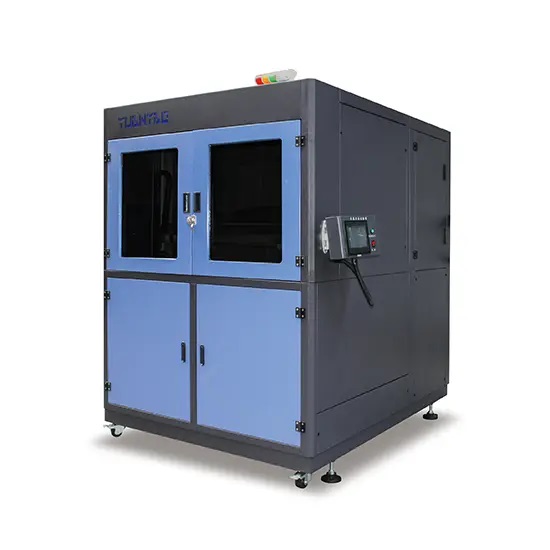
Liquid thermal shock testing chambers are not only used in the research and development phase but also play an important role in mass production and quality control. By regularly conducting liquid thermal shock tests, defects in formulations or processes can be promptly identified, ensuring that materials maintain stable performance under high and low-temperature liquid environments. The experimental results can be used to establish material performance standards and testing procedures, improving the consistency and reliability of materials. Scientific liquid thermal shock experiments can quantify the ability of different formulations to withstand high and low temperatures and liquid thermal stress, providing a scientific basis for product performance.
Liquid thermal shock testing chambers can expose materials to extreme thermal stress in a realistically simulated environment through repeated high and low-temperature liquid cycles. This testing method can effectively reveal material weaknesses under real-use conditions, such as cracking, reduced elasticity, or surface damage, helping researchers to optimize formulations accordingly. Through liquid thermal shock testing, the high and low-temperature resistance and liquid thermal stress performance of materials are significantly enhanced, reducing the risk of deformation or damage during use, ensuring that the final product maintains stable performance and longer service life in harsh environments.

 English