+86-13532971605

Outdoor electronics, automotive components, lighting products, electrical enclosures, communication equipment, and industrial devices are often exposed to dust and water during operation. Manufacturers therefore need controlled laboratory tests to determine whether an enclosure provides the required level of protection before the product reaches the market.
IP testing equipment is designed to reproduce specified dust or water ingress conditions under controlled test procedures. Selecting the correct system depends on the required IP rating, test standard, product dimensions, test method, and whether dust, water, or both forms of ingress must be evaluated.
IP testing is used to evaluate the resistance of an enclosure against the ingress of solid particles and water.
Yuanyao's IP Test Chamber product range is designed for environmental simulation testing associated with IEC 60529 and includes both dust-proof testing and water spray testing equipment.
The two parts of an IP code represent different protection categories:
The first digit relates to protection against solid foreign objects such as dust.
The second digit relates to protection against water ingress.
This is why one universal machine does not necessarily perform every IP test. Buyers should first identify the protection level required by their product and then select equipment for the corresponding test procedure.
Dust and waterproof chambers serve different purposes.
A dust chamber creates a controlled dust-filled environment around the specimen. Depending on the standard and test level, dust may circulate or fall around the sample while other test conditions are controlled.
A waterproof test system instead exposes the enclosure to water through dripping, spraying, jets, or other procedures depending on the required rating.
Companies that manufacture outdoor or electrical products may need both types of equipment, but each chamber should be selected according to the relevant protection level.
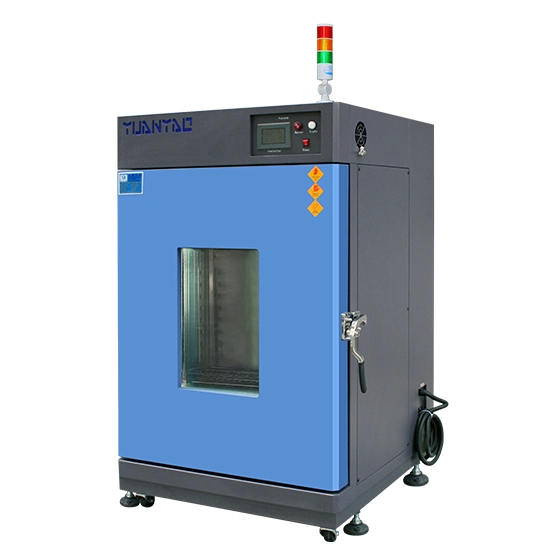
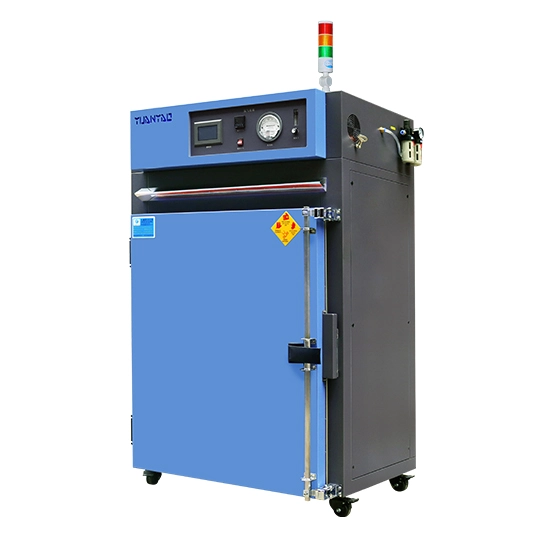
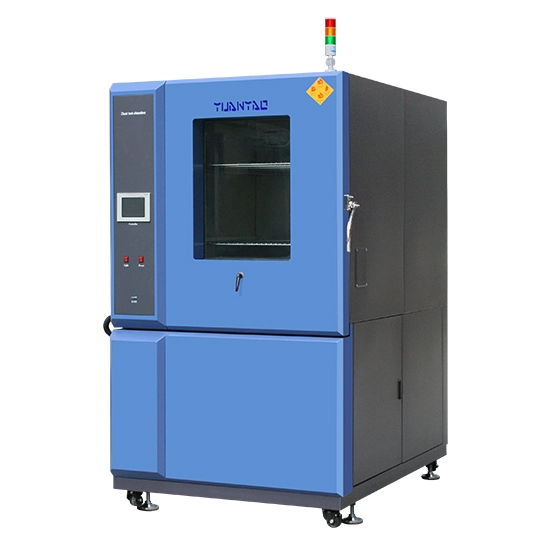
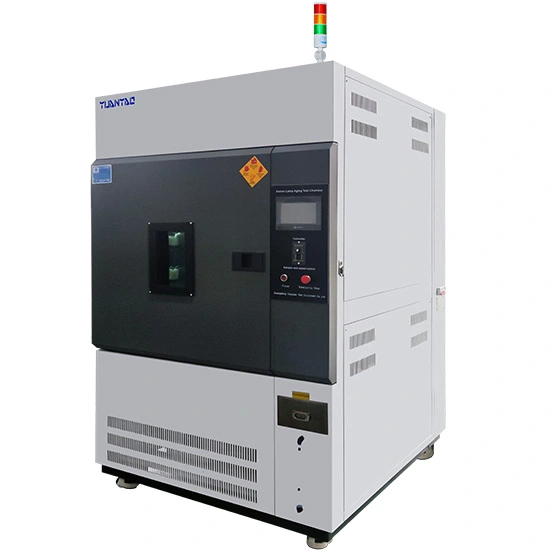
A dust test chamber introduces controlled test dust into an enclosed space to evaluate whether dust can enter a product or interfere with its operation.
Yuanyao's dust chamber testing equipment supports IEC 60529 IP5X and IP6X requirements and uses talcum powder as the standard test dust. The chamber also provides adjustable vacuum capability and programmable control.
Its published specifications include:
| Parameter | YSDT-500-C | YSDT-1000-C | YSDT-1500-C |
|---|---|---|---|
| Inner size W × H × D | 80 × 80 × 80 cm | 100 × 100 × 100 cm | 100 × 100 × 150 cm |
| Time setting | 0–999 h adjustable | 0–999 h adjustable | 0–999 h adjustable |
| Temperature setting | RT+10–50°C | RT+10–50°C | RT+10–50°C |
| Test dust | Talcum powder | Talcum powder | Talcum powder |
| Dust usage | 2–4 kg/m³ | 2–4 kg/m³ | 2–4 kg/m³ |
| Vacuum degree | 0–10.0 kPa adjustable | 0–10.0 kPa adjustable | 0–10.0 kPa adjustable |
The published chamber range also uses SUS304 stainless steel for the interior, a programmable touch-screen controller, a vacuum system, dust heating, and multiple electrical protection measures.
Both IP5X and IP6X concern protection against dust, but they represent different levels of protection.
In equipment selection, the important point is that the chamber needs to reproduce the correct procedure for the required rating. Yuanyao's dust chamber is designed to support both IP5X and IP6X testing and also references JIS D0207 and U.S. military standards.
For manufacturers developing electronics, automotive systems, lighting, sensors, or outdoor equipment, this allows dust resistance to be evaluated under standardized laboratory conditions.
A separate Yuanyao technical article on dustproof testing machine applications can also support engineers considering dust-resistance testing for electronic products.
Water ingress testing varies significantly according to the IP rating being tested.
Some tests reproduce dripping or spraying water, while higher protection levels can involve stronger water jets or immersion.
Yuanyao states that IPX1 through IPX6 can be integrated into chamber-style testing configurations, while IPX7 and IPX8 require different equipment because those levels involve water immersion rather than the same spray-based procedure.
This is an important purchasing consideration: a chamber advertised as an IP water test system should not automatically be assumed to perform every IPX level.
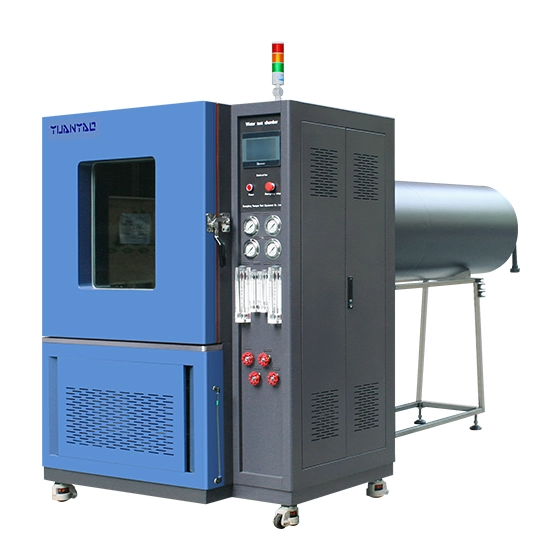
For products requiring stronger jet testing, Yuanyao offers an IPX6K system.
Its waterproof test chamber is model YSRT-1000 and is designed for high-pressure water ingress testing.
Selected published specifications include:
| Parameter | YSRT-1000 |
| Internal chamber size | 1000 × 1000 × 1000 mm |
| External chamber size | 1450 × 2000 × 3600 mm |
| Interior material | SUS304 stainless steel |
| IPX5 nozzle diameter | 6.3 mm |
| IPX6 nozzle diameter | 12.5 mm |
| Jet distance | 2.5–3 m |
| IPX5 water flow | 12.5 ± 0.625 L/min |
| IPX6 water flow | 100 ± 5 L/min |
| Water pressure | 50–150 kPa |
| Power supply | AC 3Ψ 380V, 50/60Hz |
Yuanyao also states that the system supports powered-sample testing and water recycling.
Start with the certification or engineering requirement.
A manufacturer needing only IP5X/IP6X dust testing should prioritize dust chamber performance. A manufacturer needing water protection verification should identify the exact IPX level first.
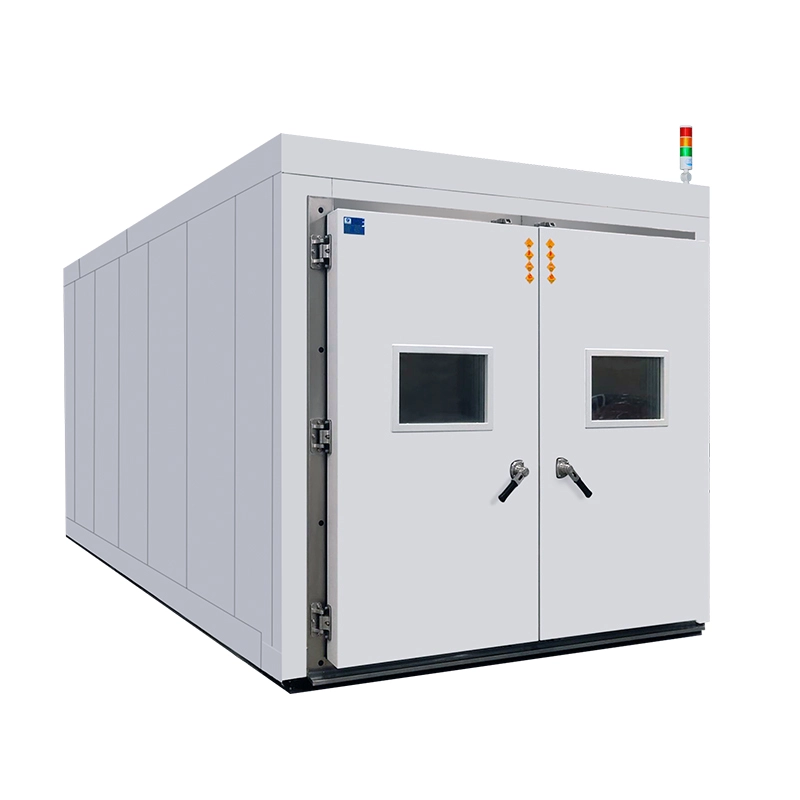
The chamber must accommodate the complete product while preserving the test geometry required by the procedure.
Small electronic modules, vehicle lamps, enclosures, and large industrial components may require very different internal dimensions.
Some products need to operate during testing.
Yuanyao's IPX6K chamber provides a waterproof plug for powered-sample testing, which may be useful when engineers need to monitor the specimen during water exposure.
For frequent testing, consumable use and laboratory utilities matter.
Yuanyao notes that chamber-type water equipment can recycle water continuously, reducing the need for continuous drainage arrangements. For dust chambers, automatic dust dehumidification and controlled circulation can help maintain test conditions.
Standard chambers may not suit every product.
Large housings, special fixtures, unusually shaped specimens, or customer-specific standards may require customized chamber dimensions or test configurations. Yuanyao states that its dust chambers can be customized for non-standard or special requirements.
Ingress protection testing is particularly relevant where products may be exposed to outdoor environments, dust, rain, cleaning water, or harsh operating conditions.
Common applications include:
Automotive electronics
Lighting products
Electrical enclosures
Sensors
Communication equipment
Outdoor consumer electronics
Industrial controls
Aerospace components
Construction equipment
Electromechanical devices
For these industries, IP testing can become part of design verification, qualification testing, production inspection, or supplier quality management.
Typically, dust and water tests require different equipment structures and test systems. Yuanyao separates its IP product category into dust test chambers and water spray test chambers.
Yuanyao states that talcum powder is normally used, while Arizona powder can also be supplied when required.
Not normally. Yuanyao states that IPX1–IPX6 can be configured in a chamber, whereas IPX7 and IPX8 require separate immersion-type equipment.
The specimen must fit inside the test space while maintaining the distance, orientation, circulation, and exposure conditions required by the chosen test procedure.
Choosing the right IP test equipment begins with identifying the required ingress protection level and understanding whether the product needs dust, spray, jet, or immersion testing. Chamber capacity, operating conditions, applicable standards, circulation systems, and customization requirements should then be evaluated together.
A properly selected dust or waterproof testing system allows manufacturers to reproduce defined environmental exposure more consistently and make better decisions about enclosure design and product reliability.

 English