+86-13532971605

Thermal shock testing is widely used to evaluate how materials, electronic components, automotive parts, plastics, metals, and assemblies respond to sudden changes between high and low temperatures. Because different chamber structures create thermal shock in different ways, prices can vary considerably between seemingly similar machines.
There is therefore no single meaningful thermal shock chamber price that applies to every laboratory. Chamber type, temperature range, working volume, recovery performance, transfer mechanism, refrigeration capacity, controller, customization, and application requirements all influence the final configuration and cost.
A thermal shock chamber repeatedly exposes a specimen to rapidly changing hot and cold environments.
The resulting thermal expansion and contraction can help reveal weaknesses in materials, assemblies, interfaces, or manufacturing processes. Yuanyao states that thermal shock testing can be used for electrical and electronic components, automotive parts, metals, plastics, chemical materials, communication components, and other products.
Yuanyao's thermal shock chamber for sale range includes three-zone, two-zone, and liquid-type thermal shock systems.
Understanding the difference between these designs is the first step toward understanding price.
The chamber structure is one of the most important cost factors.
Yuanyao offers:
Three-zone air thermal shock chambers
Two-zone air thermal shock chambers
Liquid-to-liquid thermal shock chambers
Each design uses a different method to expose the specimen to temperature changes.
A three-zone system uses independent high-temperature, low-temperature, and test zones. A two-zone system uses separate hot and cold zones with a moving basket. A liquid thermal shock system transfers specimens between liquids at different temperatures.
Because the mechanical structure and thermal control systems differ, quotations should be compared only after confirming the required chamber type.
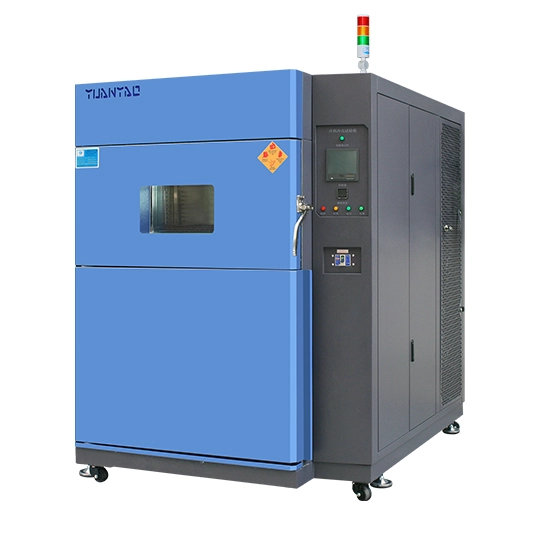
In a two-zone chamber, the specimen is placed in a basket that moves between high- and low-temperature zones.
Yuanyao publishes five models: YTST-050, YTST-080, YTST-108, YTST-216, and YTST-252.
Selected parameters include:
| Parameter | Yuanyao Published Specification |
|---|---|
| Hot zone temperature | +60°C to +200°C |
| Cold zone temperature | -10°C to -40°C / -60°C / -70°C |
| Test zone temperature | -40°C / -55°C / -60°C to +150°C |
| Temperature fluctuation | ±2°C |
| Temperature recovery | <5 min |
| Specimen transfer time | Within 15 seconds |
The smallest published test zone is 36 × 35 × 40 cm, while larger models reach 60 × 70 × 60 cm.
The short transfer time is an important specification because it directly relates to how quickly the specimen moves between thermal environments.
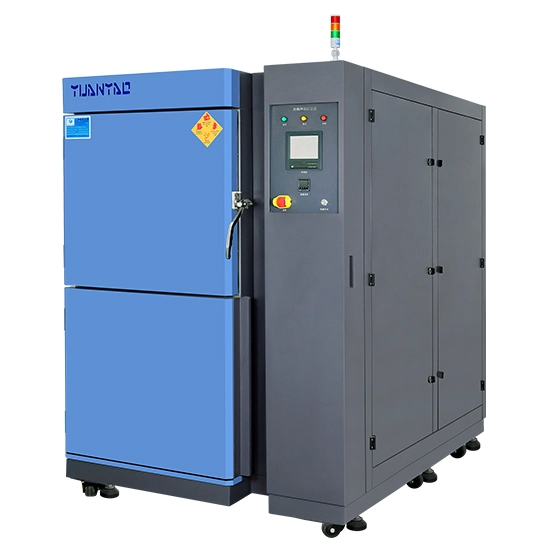
Three-zone systems provide an independent hot zone, cold zone, and test zone.
Yuanyao's three-zone chamber uses the same YTST-050 through YTST-252 model family and lists a shock temperature range reaching -40°C, -55°C, or -60°C up to +150°C, depending on configuration. Its published temperature recovery time is 3–5 minutes.
One advantage of this structure is that the test area can also be independently operated for high- or low-temperature testing.
When comparing quotations, buyers should therefore determine whether this additional test-zone arrangement is required by their test plan rather than automatically choosing the most complex chamber.
For applications requiring extremely rapid heat transfer, liquid thermal shock may be considered.
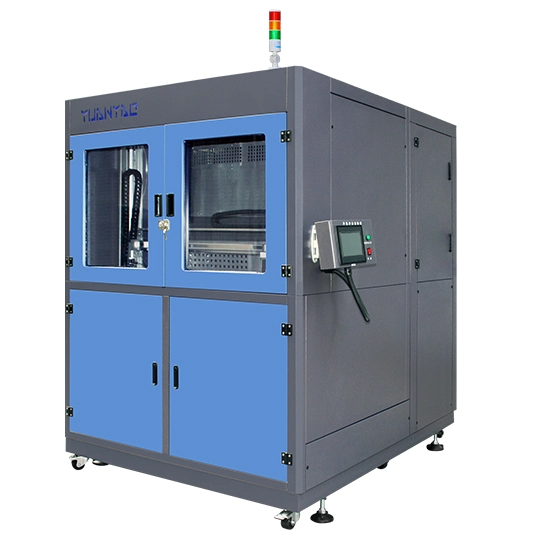
Yuanyao's liquid to liquid thermal shock systems use a basket that moves the device under test between hot and cold liquid baths. The company lists models YTST-021 and YTST-041.
Published specifications include:
| Parameter | YTST-021 / YTST-041 |
| Pre-cool range | -50°C to 0°C |
| Preheat range | +60°C to +150°C |
| Thermal shock range | -55°C to +120°C |
| Test time | 10 min |
| Temperature transfer time | About 30 s |
| Resolution | 0.01°C |
| Temperature fluctuation | ±2°C |
| Power supply | AC 3Ψ 380V, 50/60Hz |
Yuanyao indicates that liquid thermal shock equipment is used for electrical and electronic components, automotive parts, communication components, semiconductor-related products, metals, plastics, aerospace applications, and other materials.
A wider or lower temperature range can require a more capable refrigeration and heating system.
Buyers should not simply request the widest possible range. Instead, define:
Maximum high temperature
Minimum low temperature
Actual specimen temperature requirement
Required recovery time
Number of cycles
Test duration
A chamber engineered far beyond the actual requirement may increase equipment complexity unnecessarily.
Larger chambers require more internal space to be heated and cooled.
Yuanyao's two-zone models illustrate how working volume changes substantially across the product line, from a 36 × 35 × 40 cm test zone to a 60 × 70 × 60 cm test zone.
When selecting size, laboratories should consider current specimen dimensions as well as expected future testing requirements.
An oversized chamber is not always the best investment, while an undersized chamber may limit later projects.
Thermal shock testing depends not only on extreme temperatures but also on how quickly the test environment changes.
Yuanyao's two-zone system specifies specimen transfer within 15 seconds and temperature recovery within five minutes. Its three-zone system lists a 3–5 minute recovery time.
A buyer comparing a thermal shock water or air-based system should therefore look beyond maximum and minimum temperature and compare the complete transition performance required by the test method.
Programmable control is important when thermal shock tests involve repeated cycles.
Yuanyao's two-zone and three-zone chambers use programmable LCD touch-screen temperature controllers with multilingual support. Its liquid-type chamber also uses a programmable LCD touch-screen controller.
Depending on the project, buyers may also need to discuss:
Cycle programming
Data recording
Alarm functions
Remote communication
Sample monitoring
Additional sensors
These requirements can influence final configuration and quotation.
Different industries may specify different thermal shock procedures.
Before requesting a quotation, provide the supplier with the test standard or internal test method whenever possible.
A detailed requirement should include:
Specimen type
Dimensions and weight
Hot temperature
Cold temperature
Dwell time
Transfer requirement
Number of cycles
Load condition
Required recovery performance
For engineers determining the correct procedure, Yuanyao also provides technical content discussing the thermal shock test method and operating considerations.
Comparing only the final price can be misleading.
A practical quotation comparison should include:
| Item | What to Compare |
| Chamber type | Two-zone, three-zone, or liquid |
| Working volume | Actual usable test space |
| Temperature range | Hot and cold limits |
| Recovery time | Time to return to test condition |
| Transfer time | Specimen or thermal transition speed |
| Controller | Programming and operating functions |
| Refrigeration system | Capacity suitable for test conditions |
| Power requirement | Laboratory compatibility |
| Customization | Fixtures, dimensions, monitoring, interfaces |
| Technical support | Installation, training, maintenance |
This approach makes it easier to determine whether two quoted systems are genuinely comparable.
Choose a two-zone chamber when the test requires specimens to move rapidly between hot and cold air zones.
Choose a three-zone chamber when a separate stationary test zone and independent hot/cold conditioning zones better match the test process.
Consider a liquid-to-liquid system when the required test method relies on fast heat transfer through liquid media.
The choice should ultimately follow the specified test procedure rather than a general assumption that one thermal shock technology is superior to another.
There is no single price because chamber type, volume, temperature range, recovery speed, refrigeration system, controller, and customization requirements can all change the quotation.
Provide the specimen size and weight, required temperature range, chamber type, recovery or transfer requirement, test standard, cycle conditions, and any special customization needs.
A two-zone chamber transfers the specimen between hot and cold zones. A three-zone chamber uses independent high-temperature, low-temperature, and test zones.
Liquid thermal shock testing transfers specimens between liquids at different temperatures and is used when the selected test method requires this type of rapid thermal exposure. Yuanyao notes that its liquid system is particularly applicable to PCB testing within its thermal shock product overview.
Thermal shock chamber price should be evaluated together with test capability. Chamber design, working volume, temperature range, recovery performance, transfer speed, controller functions, and customization all affect whether the equipment can reproduce the required thermal shock conditions.
Defining the test method and specimen requirements before requesting a quotation makes it easier to select equipment that fits both laboratory needs and long-term testing plans.

 English