+86-13532971605

Vacuum oven prices vary widely because an oven is not defined only by its internal volume. Temperature capability, achievable pressure, chamber construction, vacuum pump, heating system, controller, shelves, nitrogen options, and process requirements all affect the final equipment cost.
For procurement teams, the most effective way to obtain a meaningful quotation is to provide actual process conditions rather than asking only for a standard laboratory vacuum oven price.
Vacuum oven price is the combined cost of the chamber, heating system, vacuum system, controls, safety components, and required customization.
A small laboratory unit operating at moderate temperature can require very different hardware from an industrial system processing battery components, electronics, chemicals, or large metal assemblies.
When contacting a vacuum oven supplier, buyers should therefore provide chamber size, product load, required temperature, target vacuum pressure, process time, and atmosphere requirements.
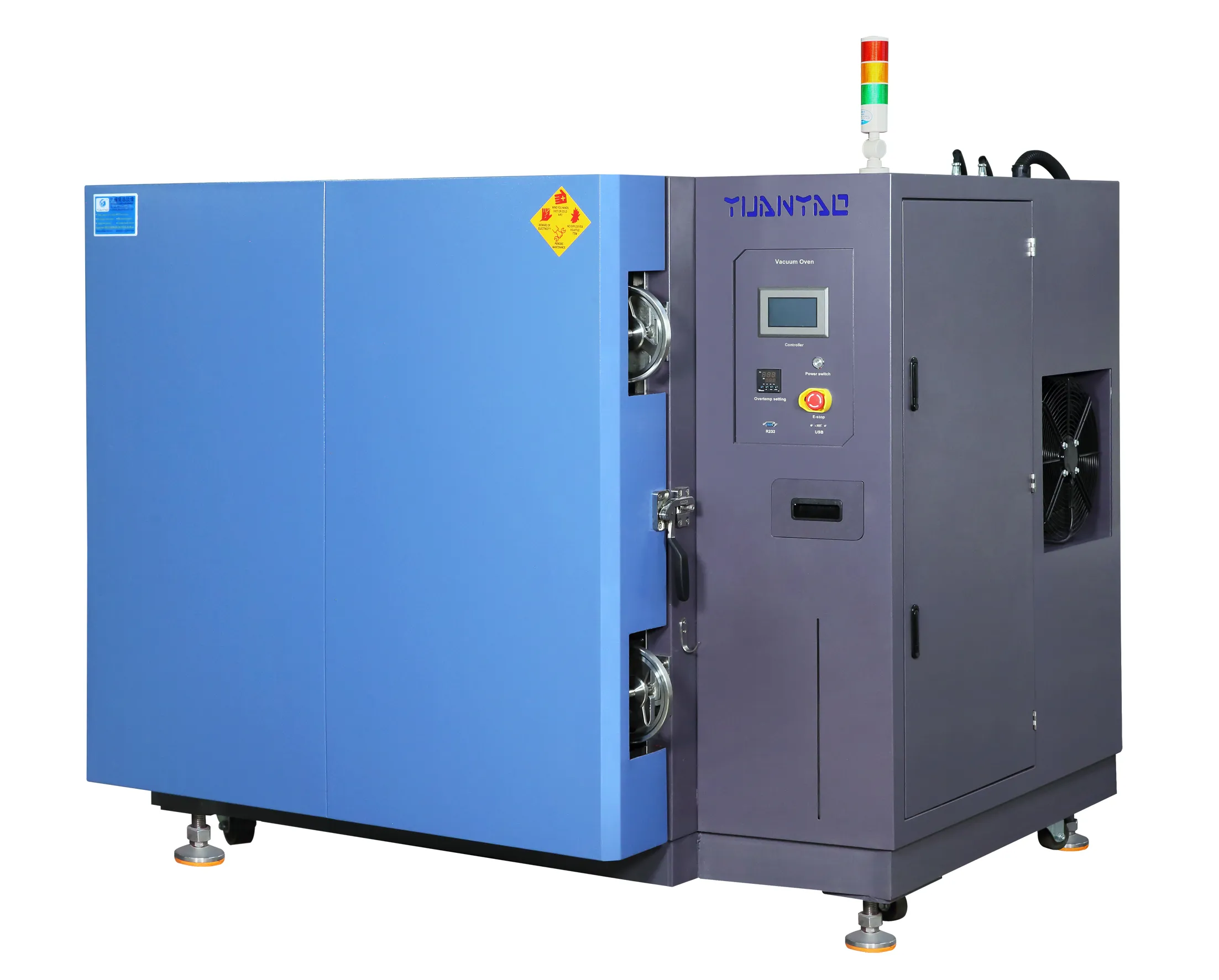
Chamber size is the usable internal volume required to hold the product while maintaining sufficient clearance for effective heating and processing.
Larger chambers require:
More stainless steel.
Stronger chamber structures.
Larger doors.
Greater heating capacity.
More insulation.
Larger vacuum pumps.
Stronger sealing systems.
For this reason, cost does not always increase in direct proportion to chamber volume.
Temperature range is the maximum controlled process temperature that the oven must safely achieve under the required vacuum condition.
Industrial vacuum ovens may be designed for moderate-temperature drying or significantly higher-temperature treatment.
Higher-temperature systems can require more expensive heaters, insulation, seals, wiring, sensors, and safety controls.
Specifying a temperature range much higher than the real process requirement may therefore create unnecessary equipment cost.

Vacuum level is the pressure remaining inside the chamber after air and process gases have been removed.
Vacuum requirements affect:
Pump selection.
Chamber sealing.
Valve design.
Vacuum gauges.
Evacuation time.
Leak-rate requirements.
Process control.
A lower target pressure generally requires more demanding vacuum hardware.
Laboratories should therefore specify the actual process pressure required instead of simply asking for the lowest vacuum technically available.
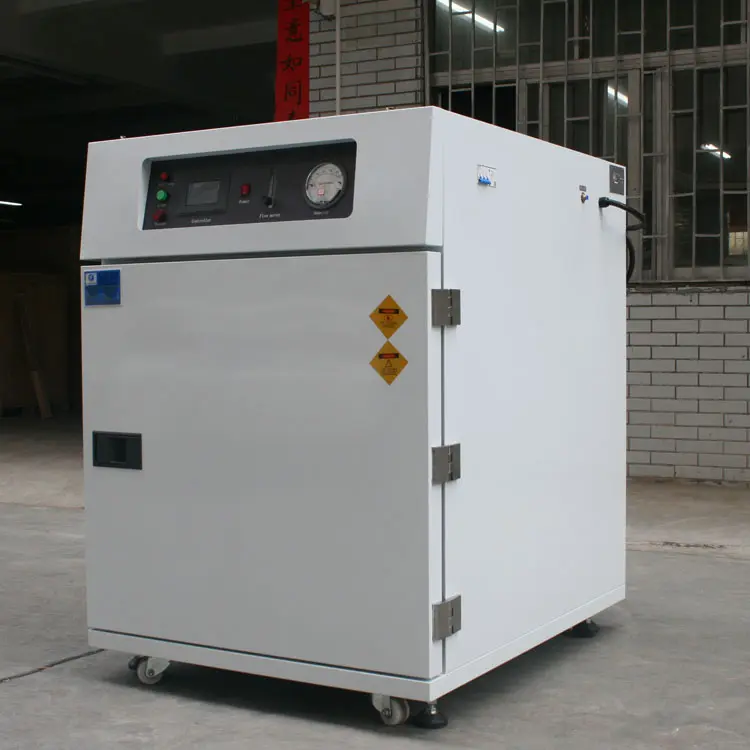
A hot air oven is convection-heating equipment used when atmospheric-pressure drying, curing, or baking is sufficient.
If vacuum-assisted drying, reduced oxidation, or low-pressure processing is not required, an industrial hot air oven may provide a simpler and more economical solution.
Vacuum should therefore be treated as a genuine process requirement rather than an automatic equipment upgrade.
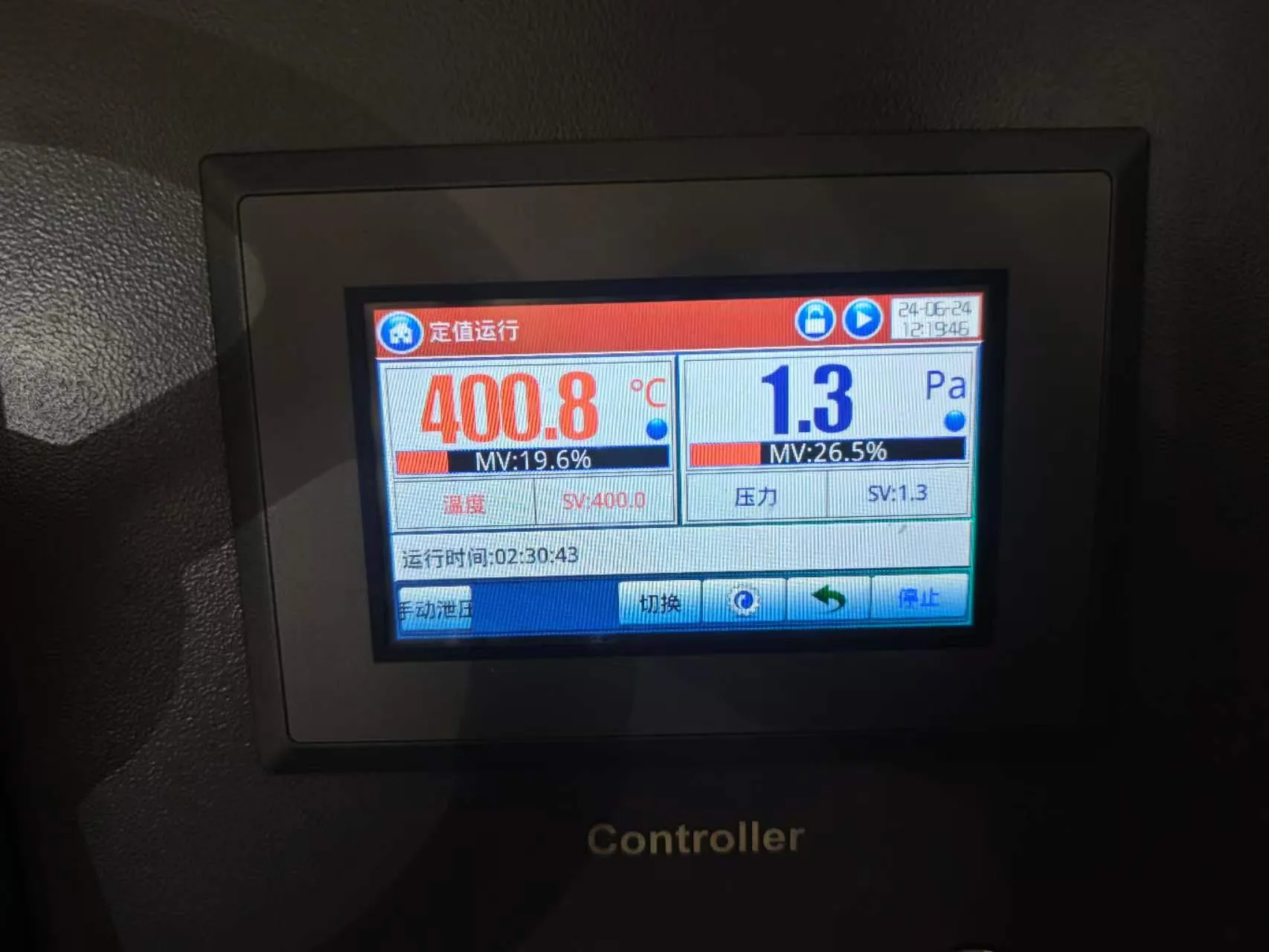
A nitrogen oven is thermal-processing equipment that uses nitrogen to reduce oxygen concentration around the product.
Nitrogen environments can be useful for oxidation-sensitive components, batteries, electronics, and other materials requiring reduced-oxygen processing.
Where an inert atmosphere is required but deep vacuum is unnecessary, an n2 oven may be considered as an alternative to a conventional vacuum oven.
An oven comparison helps procurement teams choose the simplest thermal-processing system that meets the process objective.
| Oven Type | Atmosphere | Main Advantage | Typical Use |
|---|---|---|---|
| Vacuum oven | Reduced pressure | Vacuum-assisted drying and reduced oxidation | Electronics, batteries, sensitive materials |
| Hot air oven | Atmospheric air | Simple convection heating | General drying, curing, baking |
| Nitrogen oven | Reduced-oxygen atmosphere | Oxidation control | Electronics, battery and material processing |
The lowest-priced machine is not necessarily the lowest-cost process solution if it cannot meet the required drying or oxidation-control objective.
Vacuum-oven configuration is the collection of optional hardware and performance requirements that determines final equipment cost.
Major quotation variables include:
Vacuum-pump type.
Target vacuum pressure.
Chamber size.
Temperature range.
Evacuation speed.
Programmable controller.
Data logging.
Shelf quantity.
Nitrogen purge.
Feedthrough ports.
Custom dimensions.
Cooling system.
Safety monitoring.
Buyers should separate essential process requirements from optional features during RFQ preparation.
Total cost of ownership is the combined purchase, operation, maintenance, and downtime cost of the oven throughout its service life.
A lower purchase price may become less attractive if the vacuum pump requires frequent maintenance, evacuation is too slow, or batch capacity is insufficient.
Conversely, purchasing extremely low-pressure hardware for a moderate drying process may increase capital and maintenance costs without improving production results.
A vacuum oven RFQ is a technical purchasing document that defines the process conditions the equipment supplier must satisfy.
A useful RFQ should specify:
Product dimensions.
Batch quantity.
Working volume.
Maximum temperature.
Target vacuum pressure.
Evacuation time.
Process duration.
Material being dried.
Nitrogen requirement.
Electrical supply.
Data-recording requirements.
Safety requirements.
This information allows Yuanyao and other suppliers to provide more accurate and comparable quotations.
Pump capacity, target vacuum pressure, temperature rating, controller, materials, and safety configuration can differ substantially.
No. The optimal pressure depends on the material, moisture, solvent, and process requirement.
It depends on the equipment package. Buyers should confirm whether the quoted price includes the pump.
Some systems can incorporate nitrogen or inert-gas functions when required.
Providing only chamber dimensions without specifying temperature, target vacuum, product load, and process requirements.
Yes when product geometry requires them, but unnecessary customization can increase equipment cost.
Vacuum oven price is mainly determined by the process the equipment must perform rather than by chamber volume alone.
Buyers can reduce unnecessary investment by defining the actual temperature, vacuum pressure, batch size, atmosphere, and cycle requirements before requesting quotations. Comparing vacuum, hot-air, and nitrogen systems at the process level also helps ensure that the selected equipment provides the required result without paying for functions that are not needed.
Vacuum – Wikipedia
https://en.wikipedia.org/wiki/Vacuum
Vacuum Drying – Wikipedia
https://en.wikipedia.org/wiki/Vacuum_drying
NIST – Pressure and Vacuum Calibrations
https://www.nist.gov/programs-projects/pressurevacuum-calibrations

 English