+86-13532971605

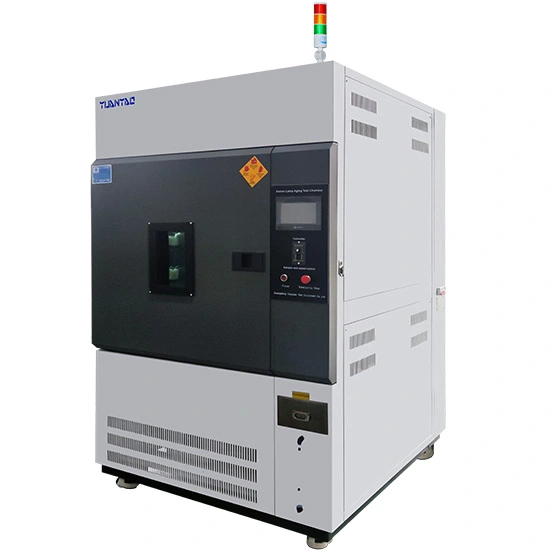
In modern material testing, xenon lamp chambers are widely used to simulate light, temperature, and humidity conditions of the natural environment, thereby assessing the durability and performance changes of materials. Plastics, coatings, and textiles often experience issues such as fading, cracking, surface aging, or strength deterioration when exposed to sunlight and natural conditions for extended periods. By using high-intensity xenon lamps to simulate the solar spectrum, xenon lamp chambers can accelerate the aging process of materials under the influence of ultraviolet, visible, and infrared light, providing scientific data for material development and quality control. By controlling light intensity, temperature, humidity, and spraying cycles, xenon lamp chambers can precisely replicate the effects of different climatic conditions on materials, enabling the early detection of potential performance degradation issues.
The most common aging phenomena in plastic materials under xenon lamp exposure include fading, embrittlement, and decreased strength. Common plastics like polypropylene (PP), polycarbonate (PC), and ABS experience gradual chain scission in their molecular structure under long-term ultraviolet exposure, leading to surface cracking, pulverization, and even complete breakage. Additionally, the high temperatures and humidity cycles in xenon lamp chambers accelerate the oxidation and photodegradation of plastics, causing a gradual decline in their mechanical properties. Xenon lamp chamber testing can accurately assess the long-term outdoor reliability of plastics, providing guidance for product formulation optimization and the development of modified materials.
Coatings in xenon lamp chambers primarily exhibit fading, yellowing, blistering, and peeling. Ultraviolet light can damage the pigment and resin molecules in coatings, causing colors to gradually lighten or shift. High temperatures and humidity cycles may lead to layer expansion and loss of adhesion, resulting in blistering and cracking. The simulated environment of the xenon lamp chamber allows researchers to understand the long-term lightfastness, heat resistance, and moisture resistance of coatings, thereby improving formulations, selecting suitable additives, or substrates to enhance the weatherability and longevity of coatings.
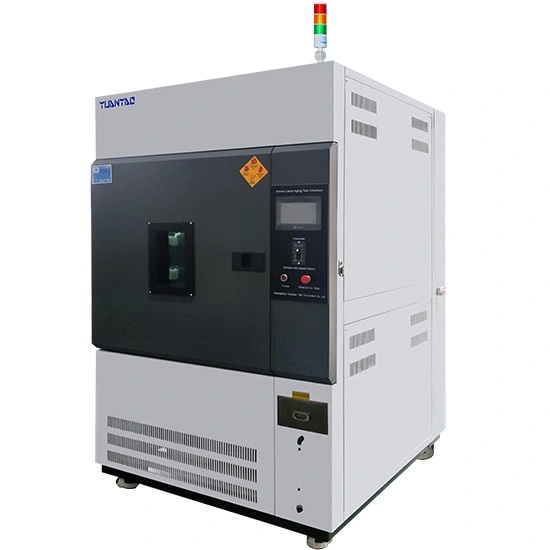
Textiles exposed in xenon lamp chambers typically exhibit fading, fiber embrittlement, and decreased strength. Natural fibers such as cotton and linen are prone to photochemical reactions under ultraviolet light and humid conditions, leading to color fading and reduced flexibility. Although synthetic fibers like polyester and nylon have better lightfastness, long-term exposure still results in surface micro-cracks and decreased fiber strength. Accelerated aging tests in xenon lamp chambers effectively analyze the performance of textiles under conditions of sun exposure, rain erosion, and temperature and humidity variations, providing scientific evidence for the durability design of outdoor apparel, industrial fabrics, and protective materials.
Xenon lamp chambers can not only quickly and controllably simulate light, temperature, and humidity conditions in natural environments but also assist R&D personnel and quality control teams in identifying potential long-term usage issues in materials. By systematically analyzing the aging phenomena of plastics, coatings, and textiles, companies can optimize material formulations, choose appropriate protective additives, and establish scientific usage standards and testing procedures. Data provided by xenon lamp chambers can guide material modification, enhance weatherability, and improve product reliability, offering users safe and stable material performance assurance. This makes xenon lamp chambers indispensable testing equipment for modern material development and industrial production.

 English