+86-13532971605

The sand and dust test chamber primarily simulates sandy weather conditions in the natural environment to conduct tests, mainly assessing the wind resistance and anti-corrosion capabilities of products. Among various environmental testing equipment, the sand and dust test chamber holds an important position. With the continuous development of industries such as new energy vehicles, smart terminals, and military equipment, the reliability requirements for products in complex environments are increasingly high, and sand and dust testing is a crucial method for evaluating product protection performance.
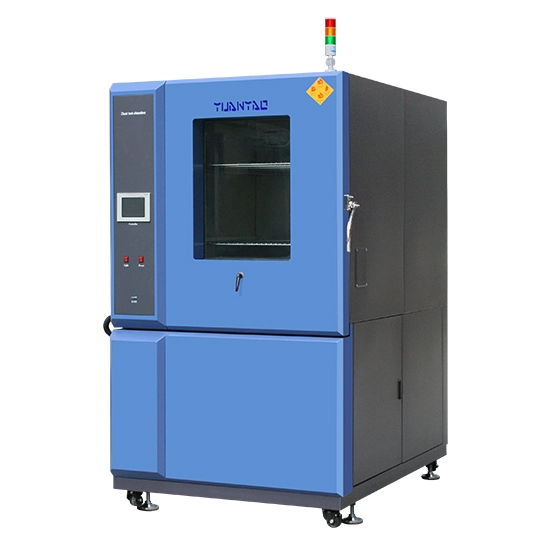
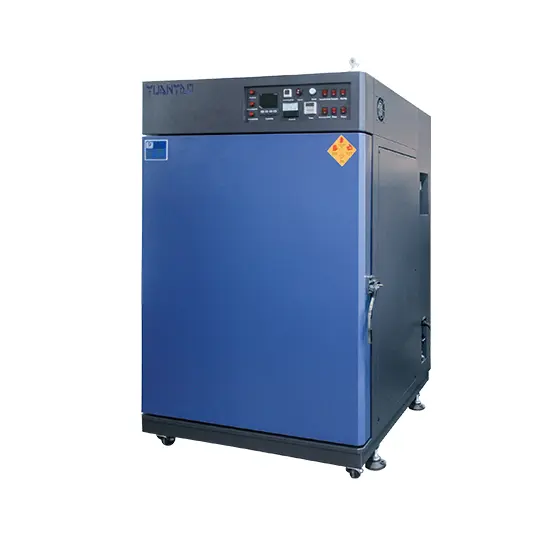
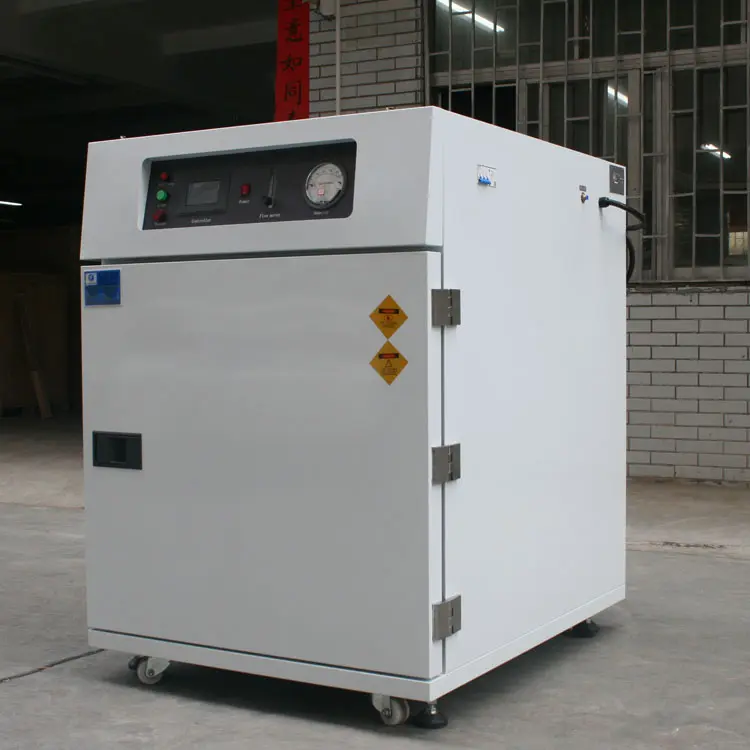
Sand and dust test chamber, also known as a dust-proof test chamber, is a device used to detect the protection level of a product's enclosure (IP protection level). It simulates environments such as sand and dust to test the sealing and reliability of products under dusty or sandstorm conditions.
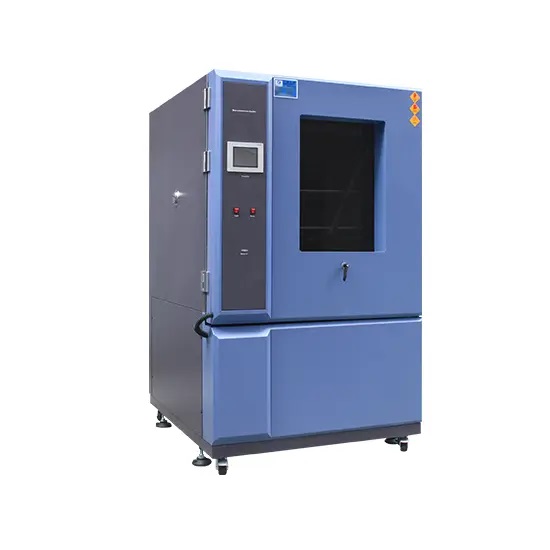
The sand and dust test chamber simulates the natural environment mainly through the following methods:
1. Dust circulation system: Standard dust (such as talcum powder, silica sand) is continuously blown to create a diffuse sand and dust environment.
2. Vacuum suction system: Negative pressure is applied to samples with air vents or gaps to check if dust is drawn in.
3. Time and wind speed control: Precisely controls the dust blowing time, wind speed, and concentration to ensure test results meet standards.
The sand and dust test chamber can be used to evaluate all mechanical, optical, electrical, electronic, electromechanical, and electrochemical equipment that may be exposed to dry sandblasting environments, dusty atmospheres, or dust conditions.
Mechanical: Tests the wear resistance, sealing performance, and operational stability of mechanical equipment in sand and dust environments.
Optical: Assesses the light transmission performance and dust resistance of lenses, cameras, and optical instruments in dusty environments.
Electrical: Inspects the insulation performance, conductive reliability, and safety of electrical equipment under dusty conditions.
Electronic: Verifies the protection level and long-term operational stability of electronic products in sand and dust environments.
Electromechanical: Evaluates the reliability of moving parts and stability of control systems of electromechanical equipment in dusty environments.
Electrochemical: Tests the performance retention and durability of batteries, sensors, and other electrochemical equipment in dust-laden environments.
Highly simulates real environments: Can reproduce natural environments like sandstorms and sandy winds.
Precise control: Dust concentration, flow rate, and time can all be adjusted.
Meets multiple standards: Suitable for different levels of protection testing.
Wide application range: Covers multiple fields such as electronics, automotive, new energy, and military.
Test space size: Choose according to the size of the product being tested.
Dust type: Needs to meet standards.
Airflow speed and concentration control: Whether it supports precise adjustment.
Vacuum suction system: Used for testing the sealing of products with air vents.
Operation and safety: Intelligent control, data recording, multiple safety protections.
As product application scenarios continue to expand, the sand and dust test chamber has become an essential tool for evaluating product protection performance and reliability. It not only helps companies improve the protection level of their products (IP certification) but also effectively reduces quality risks caused by environmental issues. As a professional brand of environmental testing equipment, Yuanyao has long focused on the field of environmental reliability testing. With stable product performance, comprehensive technical support, and rich industry experience, Yuanyao has become one of the most trusted manufacturers of sand and dust test chambers for many enterprises.
Under normal circumstances, sand and dust testing is a reliability verification test and will not cause serious damage to qualified products. If the product's sealing performance is insufficient, dust ingress or functional abnormalities may occur.
Most sand and dust test chambers are equipped with a dust circulation system, and test dust can be reused under certain conditions. To ensure test accuracy, the dust needs to be regularly replaced and maintained.
It is very suitable. Outdoor equipment is often exposed to wind, sand, and dust environments, and sand and dust testing can effectively verify its protection capability and service life.

 English