+86-13532971605

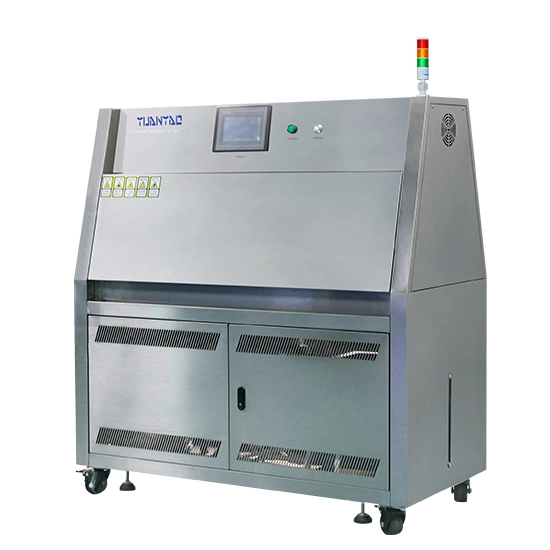
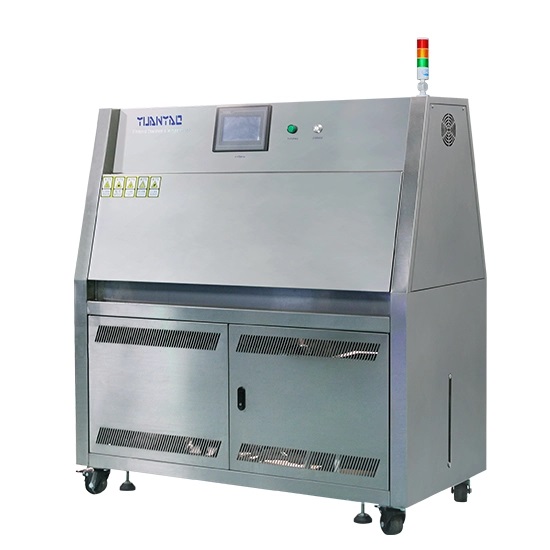
The UV aging test chamber, as a key device for testing the weather resistance of materials, relies directly on daily maintenance for its stability and the accuracy of test results. Regular and standardized maintenance not only extends the service life of the equipment but also ensures the reliability of test data.
External Cleaning: After each day's test, use a soft damp cloth to wipe the external surface of the equipment to remove dust and dirt. Be careful not to use cleaners containing chemical solvents to avoid damaging the equipment's casing.
Internal Cleaning: After the equipment cools down, promptly clean the interior, focusing on the UV lamps, reflectors, and workspace to prevent dust from affecting light uniformity. It is recommended to wipe the reflectors with a special cleaning cloth monthly to avoid scratches.
Sample Rack and Tray Cleaning: After each test, rinse the sample rack and tray with clean water to remove surface dust and sample residues. If there are oil stains or sticky residues, soak them in a neutral detergent, scrub, and then rinse with clean water and dry.
UV Lamp Maintenance
The UV aging lamp is the core component of the UV aging test chamber, and its radiation intensity diminishes with prolonged use.
Observe weekly if the lamp emits light evenly, and check for any blackening, flickering, or failure to light;
Generally, after 1500-2000 hours of cumulative use, the radiation intensity of the lamp should be tested, and if the intensity is below 80% of the standard value, it should be replaced promptly;
Wipe the lamp surface with a lint-free cloth monthly to avoid grease or dust accumulation.
Door Seal Inspection
Regularly inspect the door seals for aging, adjust hinges or locks to ensure tightness. Poor sealing can lead to temperature and humidity leakage, affecting test results.
Electrical System Inspection
Monthly check whether buttons and displays are functioning properly, inspect the air filtration system and circulation fans, and clean or replace as necessary.
Weekly Maintenance: Use a UV radiometer to detect lamp radiation intensity; clean filters; check the water circulation system and replenish deionized water to the scale line.
Monthly Maintenance: Calibrate the temperature control system; check electrical circuits; clean cooling fans; thoroughly clean UV lamps and reflectors.
Quarterly Maintenance: Replace seals; check motor operation status; calibrate the time controller; clean the condenser.
Annual Maintenance: Invite professional technicians for comprehensive machine testing, thoroughly disassemble and clean core components, test the equipment's insulation performance, and replace aging wires and water pipes.
Sample Placement: When placing test samples, ensure they are evenly distributed on the sample rack to avoid mutual obstruction affecting the uniformity of UV exposure.
Avoid Frequent Start-Stop: During the startup process, the lamps and circuit system undergo instantaneous high voltage and current impact; frequent start-stop can shorten the lifespan of lamps and electrical components.
Water Quality Requirements: Condensed water is recommended to use distilled or deionized water to reduce scale accumulation in the water pan. Spray water must be of high purity with conductivity above 2μS/cm.
Environmental Control: The UV aging test chamber should be placed in a well-ventilated area, and it is recommended to install a ventilation fan. The ambient temperature should be stable to avoid thermal expansion and contraction causing structural deformation.
What is a UV aging test chamber?
A UV aging test chamber is a specialized device used to simulate the damaging effects of ultraviolet (UV) light, moisture, and temperature on materials. It accelerates weathering processes to evaluate how products such as plastics, coatings, rubber, and textiles perform under prolonged sunlight exposure.
How does a UV aging test chamber work?
A UV aging test chamber uses UV lamps (commonly UVA or UVB) to replicate sunlight exposure, combined with controlled temperature and moisture cycles such as condensation or water spray. These cycles simulate natural weathering conditions, allowing materials to degrade in a shorter time while maintaining repeatable and standardized testing conditions.
What materials can be tested in a UV aging test chamber?
UV aging test chambers are widely used to test plastics, paints, coatings, rubber, adhesives, textiles, and automotive components. These materials are particularly sensitive to UV radiation, which can cause fading, cracking, chalking, and loss of mechanical properties.
What are the common standards for UV aging testing?
Common international standards for UV aging testing include ASTM G154, ASTM G155, ISO 4892, and SAE J2020. These standards specify test methods, lamp types, exposure cycles, and evaluation criteria to ensure consistent and comparable results across laboratories.
What is the difference between UV aging test and xenon test?
A UV aging test primarily focuses on the ultraviolet portion of sunlight using UV lamps, while a xenon test uses xenon arc lamps to simulate the full solar spectrum, including visible and infrared light. Xenon testing provides a more comprehensive simulation of natural sunlight, whereas UV testing is more cost-effective and suitable for focused UV degradation studies.

 English