+86-13532971605

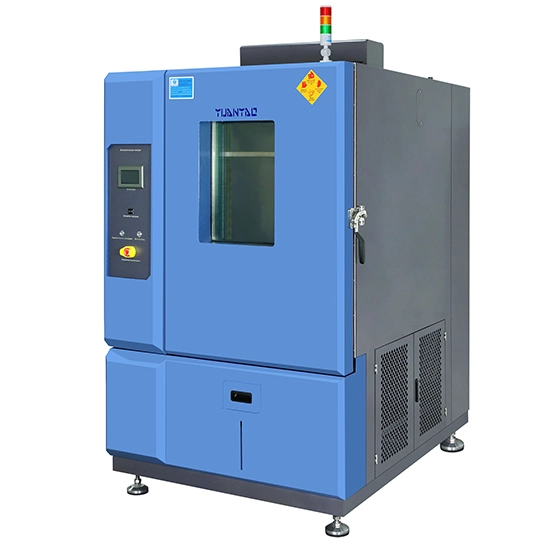
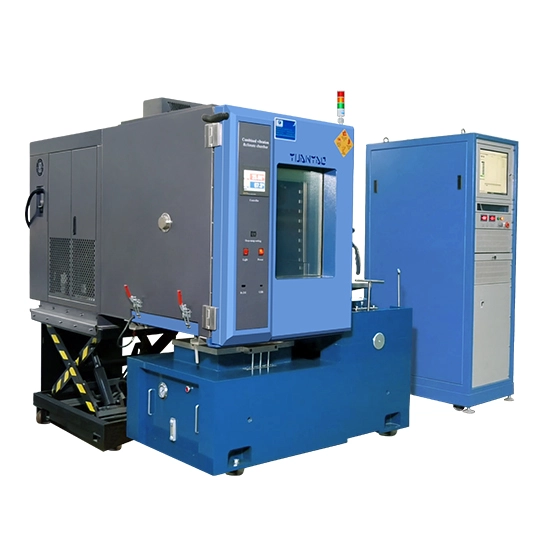
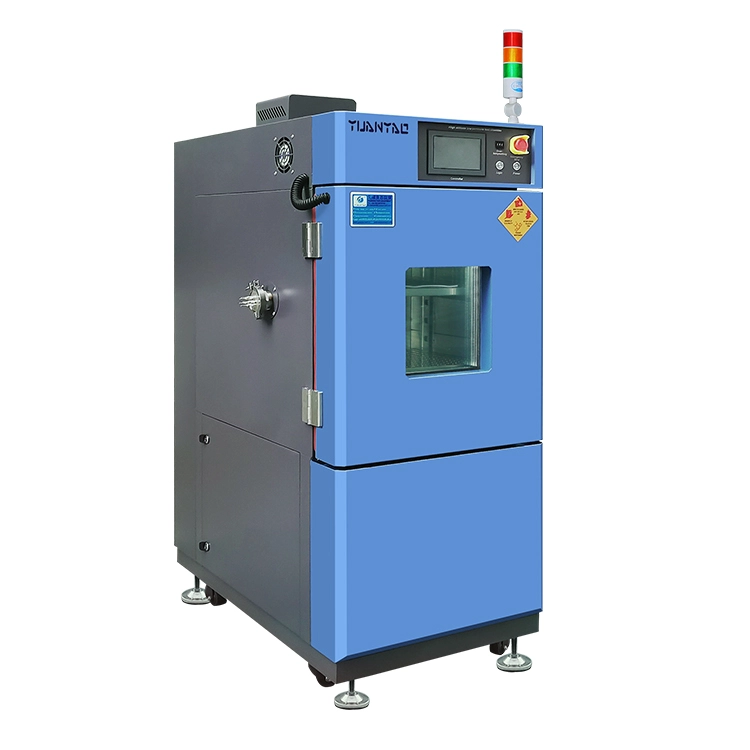
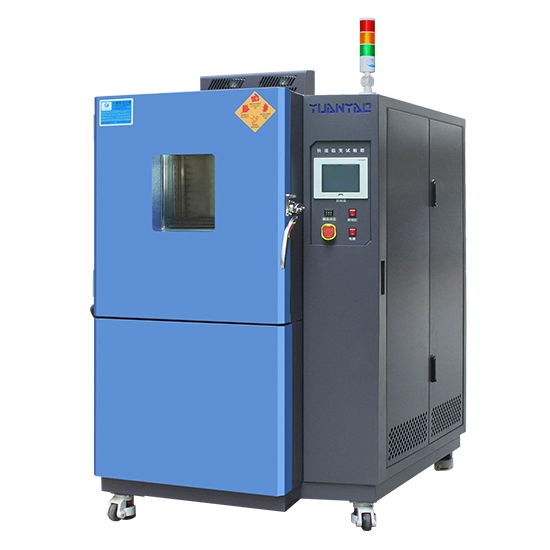
In reliability validation for electronics, automotive components, semiconductors and advanced‑material industries, thermal shock chambers serve as core environmental test equipment. They simulate abrupt extreme‑temperature transitions to expose latent structural and material defects within assemblies and components.
Nevertheless, equipment specifiers and test engineers often face challenges when evaluating diverse configurations including 2‑zone, 3‑zone and liquid thermal shock chambers. Proper selection requires alignment with applicable industry standards, real‑world service conditions and specimen characteristics.
Thermal shock testing replicates rapid alternations between high and low temperature extremes. Intense thermomechanical stress originates from coefficient‑of‑thermal‑expansion (CTE) mismatch among dissimilar bonded materials, triggering thermal expansion and contraction cycles. This accelerated stress screening uncovers failure modes such as structural fatigue, performance drift, solder joint fracture, delamination and micro‑cracking.
Widely adopted across consumer electronics, automotive hardware, telecommunication infrastructure, metal‑polymer composites and aerospace‑defense sectors, thermal shock qualification forms a mandatory gate before mass production. Different chamber architectures deliver distinct test mechanics, throughput and stress severity, making hardware configuration a primary decision point for lab setup.
2.1 2-Zone Thermal Shock Chamber: High Throughput General Purpose Solution
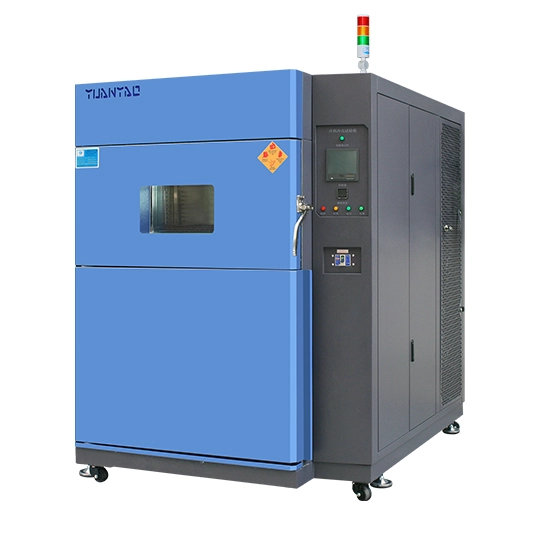
The 2‑zone design incorporates independent hot and cold compartments plus a motor‑driven transfer basket. Specimens are mechanically shuttled swiftly between the two zones to achieve rapid hot‑cold transitions. It remains the most widely deployed configuration for mainstream reliability validation.
Typical applications & industries
Optimized for high‑volume batch testing and compliance‑oriented qualification against international standards. Representative use‑cases cover automotive sensors, consumer‑electronic PCBA, generic plastic‑metal assemblies. For automotive electronics, it verifies thermomechanical performance under cold startup and high‑temperature driving conditions. For consumer electronics, it screens manufacturing weaknesses including poor solder joints and package cracking.
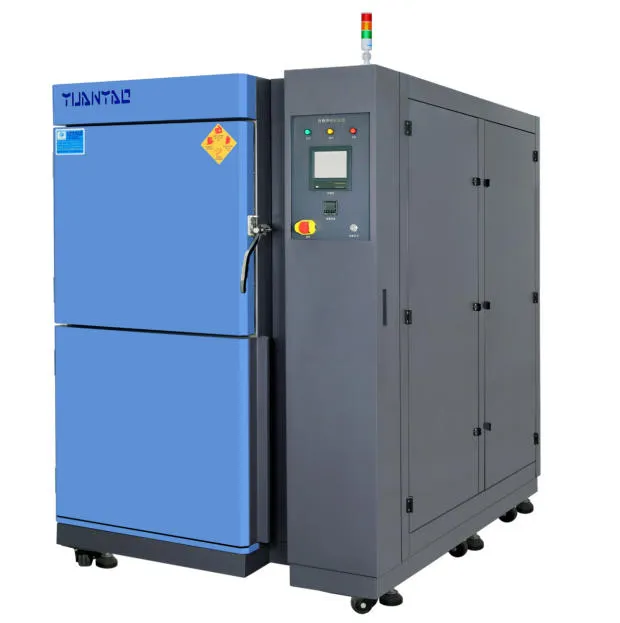
2.2 3-Zone Thermal Shock Chamber: Multi‑Mode Flexible Testing
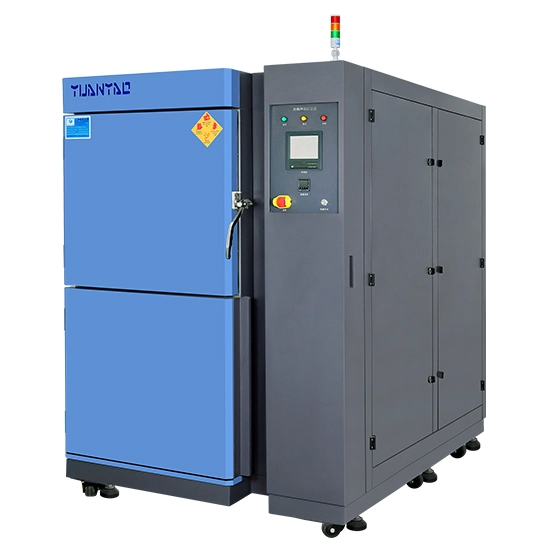
Built upon hot and cold zones, the 3‑zone configuration adds a dedicated ambient compartment. It supports complete hot‑ambient‑cold sequential thermal‑shock profiles. Additionally, it can run standalone high‑temperature or low‑temperature ageing cycles without hardware reconfiguration, delivering flexible multi‑condition validation workflows.
Typical applications & industries
Suited for projects combining long‑term single‑zone ageing and subsequent thermal‑shock sequences, as well as complex multi‑step qualification for high‑precision connectors, telecom base‑station modules and aerospace components. For example, R&D teams can execute high‑temperature burn‑in followed immediately by thermal‑shock cycles within one unit, eliminating sample handling between separate test systems and streamlining R&D throughput.
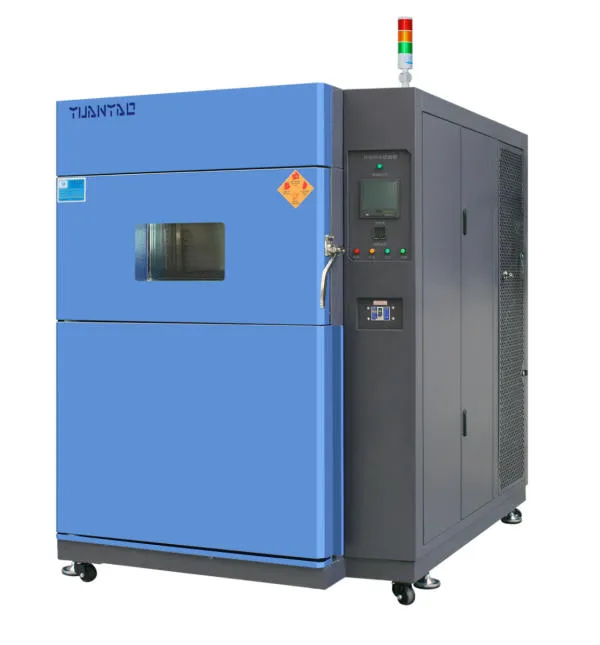
2.3 liquid Thermal Shock Chamber: Severe Stress Testing for High Performance Materials
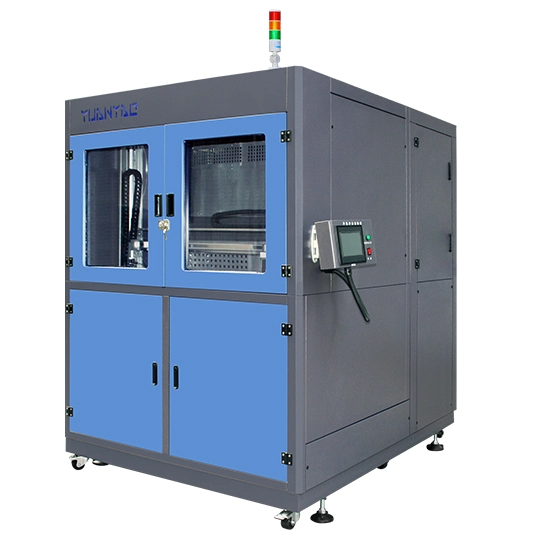
liquid thermal‑shock systems adopt dual hot‑liquid and cold‑liquid baths. The transfer basket immerses specimens directly within liquid media. Liquid‑phase heat transfer delivers far faster thermal ramping compared with air‑based systems, generating more aggressive thermal‑shock stress while mitigating oxidative exposure to test articles.
Typical applications & industries
Purpose‑built for high‑severity material characterization, semiconductor packaging validation, ceramic‑substrate crack‑risk assessment and advanced‑material qualification for aerospace and defense. It is widely specified for semiconductor packaging thermal‑shock stability evaluation and advanced‑material R&D workflows.
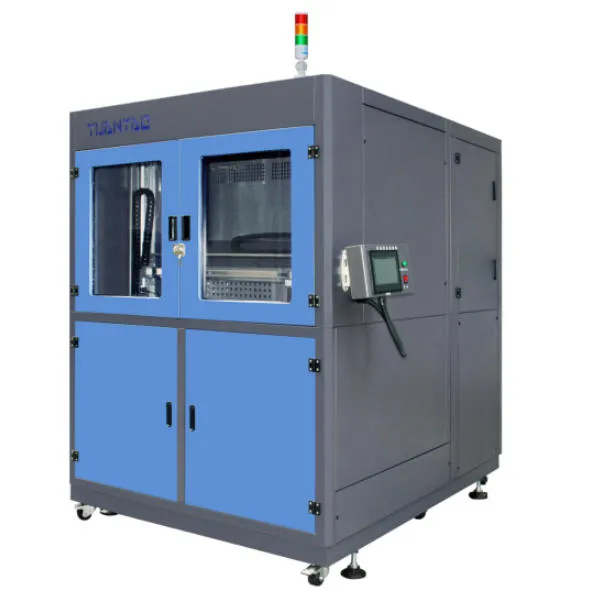
For thermal‑shock procurement, higher price or richer feature sets do not always equal better suitability. The optimal solution hinges on matching chamber architecture to your target test standards, specimen geometry, required stress severity and laboratory throughput targets.
Modern thermal‑shock product portfolios cover the full spectrum from routine volume qualification to sophisticated advanced‑material R&D, with customised engineering available for non‑standard requirements. Whether you run routine production‑phase screening or bespoke R&D validation, there exists a configuration aligned with your project objectives.

 English